
 Save
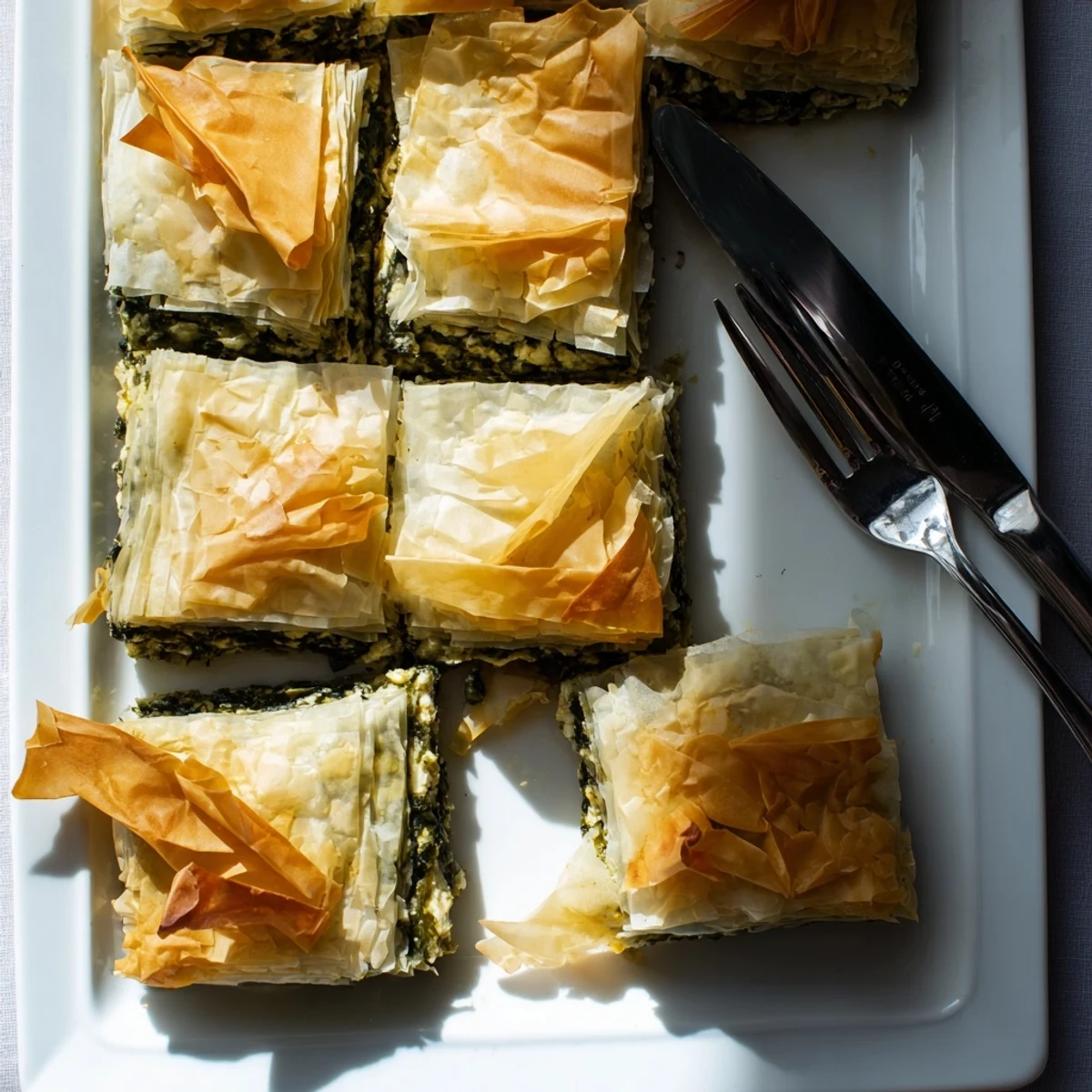
Save This beloved Greek dish features delicate phyllo pastry brushed with olive oil and butter, layered with a vibrant mixture of wilted spinach, aromatic dill, parsley, and mint, combined with rich feta and creamy ricotta. After 50 minutes in the oven, the top emerges beautifully golden while the filling stays moist and flavorful. The result is a satisfying combination of textures—crispy, shattering pastry giving way to a tender, herbaceous center. Ideal for gatherings, this dish serves eight and pairs wonderfully with crisp white wine and fresh salads.
The first time I had proper spanakopita was in a tiny Athens taverna where the owner's grandmother still made everything by hand. She pressed a warm slice into my palm and told me the secret was patience, not technique. That flaky, golden exterior giving way to that bright, herbaceous filling stuck with me for years. Now my kitchen smells like dill and butter whenever I need to transport myself back to that marble table outside.
I made this for a dinner party last spring when fresh spinach was flooding the markets. My friend Maria, who'd grown up eating her grandmother's version, took one bite and got quiet. Turns out the nutmeg was the touch she'd been trying to remember for years. There's something deeply satisfying about unlocking someone else's food memory without even realizing it.
Ingredients
- Fresh spinach: While frozen works, the fresh leaves give you a brighter flavor and texture that really sings through the rich cheese
- Feta cheese: Buy a block and crumble it yourself for better texture and control over salt levels
- Ricotta or anthotyro: This creates that creamy base that balances the salty feta and wilted spinach perfectly
- Phyllo dough: Keep it covered with a damp towel while working, as dried sheets become impossible to work with
- Olive oil and butter: Using both gives you the flavor of butter and the crispness that only olive oil can achieve
- Fresh herbs: The trio of dill, parsley, and mint is non-negotiable for that authentic Greek brightness
Instructions
- Get your oven and pan ready:
- Preheat to 180°C (350°F) and lightly grease a 33x23 cm rectangular baking dish with some olive oil.
- Sauté the onions:
- Warm 2 tbsp olive oil in a large skillet over medium heat, cooking the yellow onion until soft and translucent, about 5 minutes. Add the spring onions and cook for 2 more minutes until fragrant.
- Wilt the spinach:
- Add fresh spinach in batches, cooking until wilted and all liquid has evaporated completely. Remove from heat and stir in the dill, parsley, and mint. Let it cool slightly.
- Make the filling:
- In a large bowl, combine crumbled feta, ricotta, beaten eggs, salt, pepper, and nutmeg. Add the cooled spinach mixture and mix until everything is well incorporated.
- Prepare the phyllo:
- Cover the phyllo dough with a damp towel while you work to prevent drying out. Keep your olive oil and melted butter nearby in a small bowl.
- Layer the bottom:
- Place one sheet of phyllo in the baking dish and brush generously with the oil and butter mixture. Repeat with 6 to 8 sheets, brushing each one thoroughly.
- Add the filling:
- Spread the spinach and cheese mixture evenly over the bottom layers of phyllo, right to the edges.
- Layer the top:
- Layer the remaining phyllo sheets over the filling, brushing each with oil and butter. Tuck the overhanging edges inside and brush the top very generously.
- Score before baking:
- Use a sharp knife to carefully score the top layers into squares or diamonds. This helps with even cooking and makes cutting much easier later.
- Bake until golden:
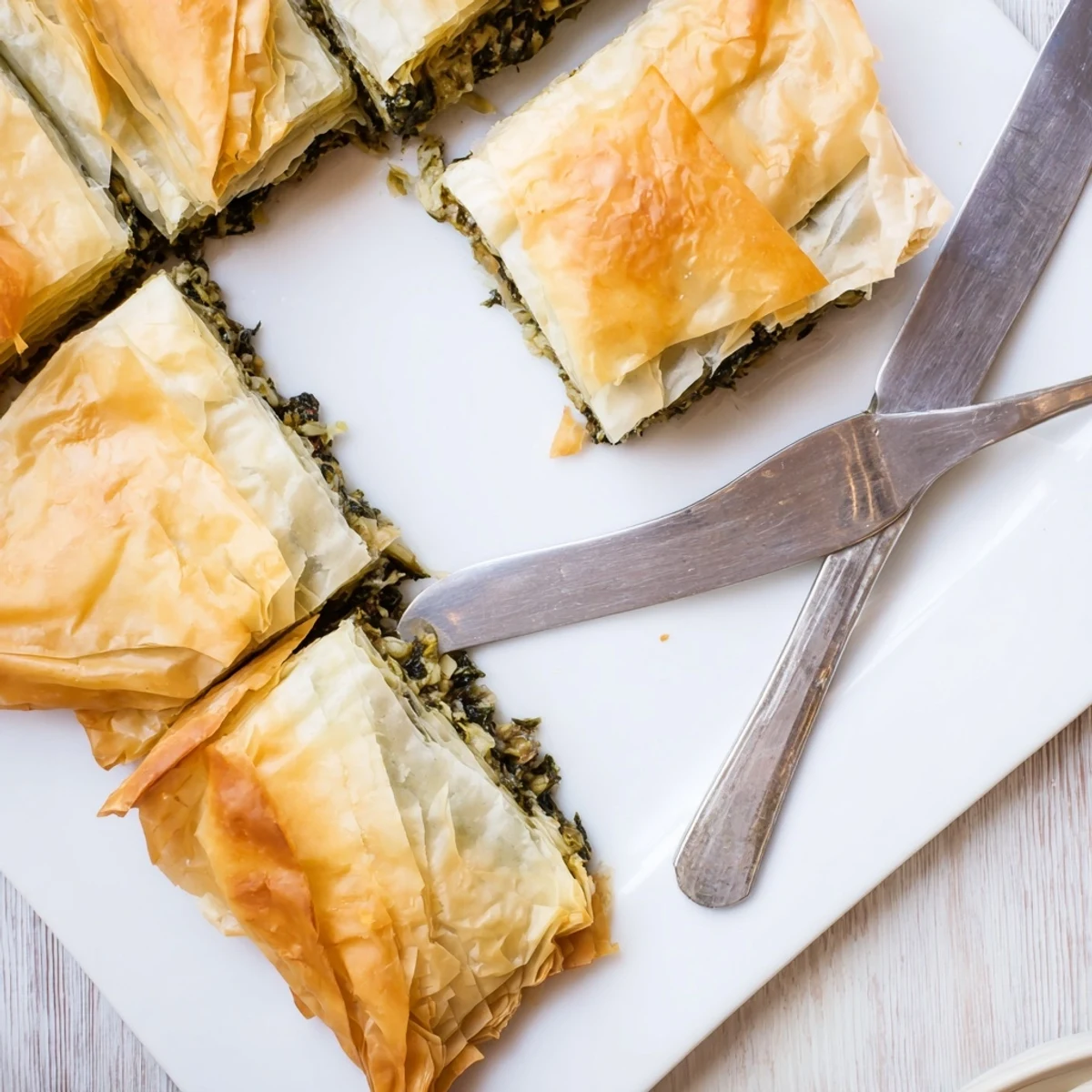
- Bake for 45 to 50 minutes until the spanakopita is deep golden brown and crisp all over. The filling should be set and bubbling slightly.
- Let it rest:
- Cool for at least 10 minutes before slicing along the scored lines. This rest period is crucial for clean portions.
 Save
Save My youngest daughter helped me assemble this last weekend, her small hands brushing oil onto each sheet with surprising care. She kept sneaking bits of the spinach filling when she thought I wasn't looking. Now she asks for spanakopita by name and tells everyone it's our special recipe, though it belongs to generations of Greek cooks before us.
Getting The Phyllo Right
Working with phyllo can feel intimidating the first time. The key is keeping it covered with that damp towel and working with a gentle confidence. Even if a sheet tears, just patch it and keep going. The layers will hide any imperfections, and honestly, rustic spanakopita is just as delicious as pristine.
Make Ahead Wisdom
You can assemble the entire spanakopita up to 24 hours ahead, wrap it tightly, and refrigerate until you're ready to bake. Add a few extra minutes to the baking time if it's cold from the fridge. Some people even freeze it unbaked, wrapping it extremely well before freezing.
Serving Suggestions
Spanakopita is versatile enough to work as breakfast, lunch, or a light dinner. A crisp Greek salad with plenty of tomatoes and cucumber balances the richness perfectly. It's also wonderful with a simple bowl of lemony avgolemono soup for a complete meal.
- Let leftovers come to room temperature rather than reheating, as the phyllo stays crisper
- Pair with an Assyrtiko or Sauvignon Blanc to cut through the richness
- Grate a little kefalotyri over the filling before adding the top phyllo layers for extra depth
 Save
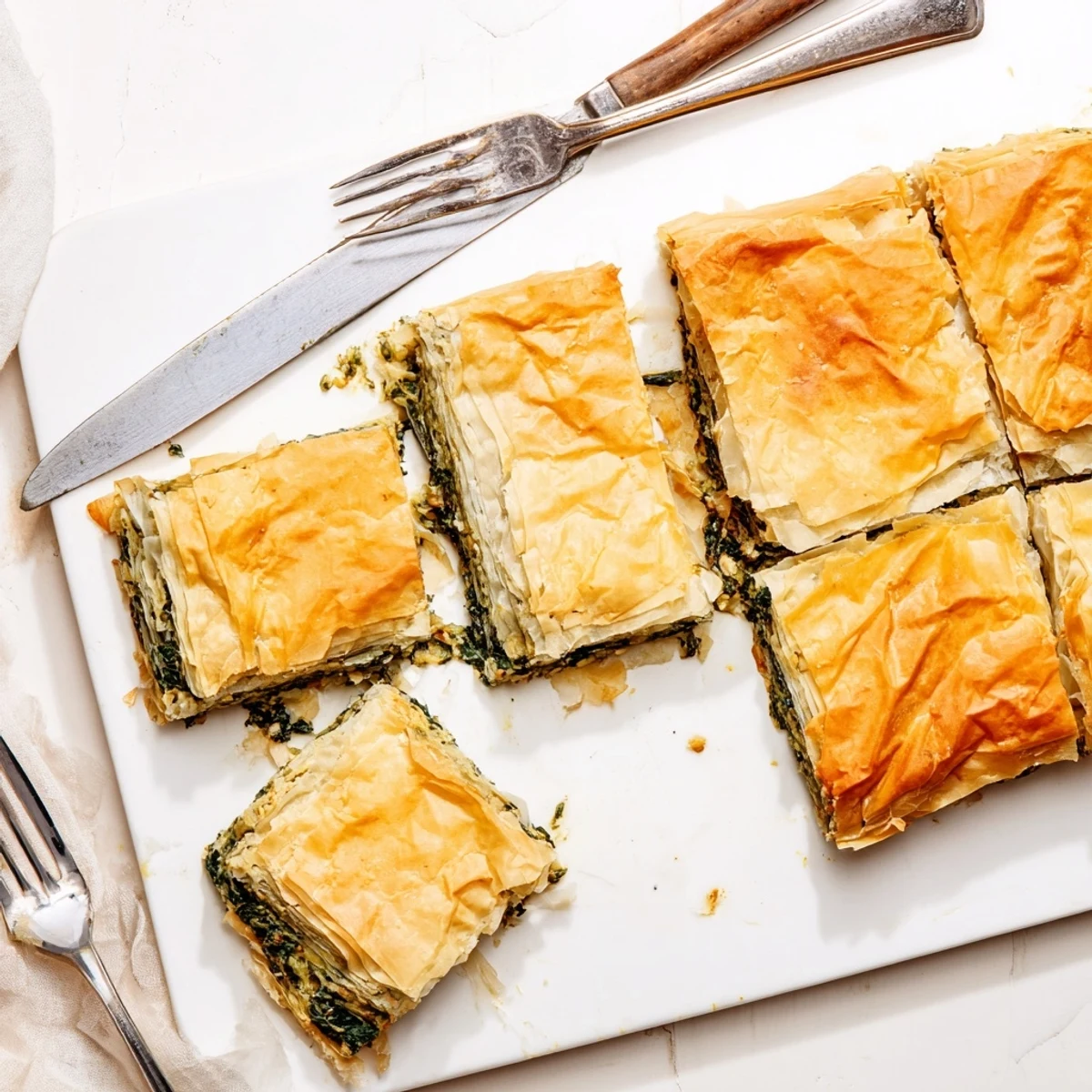
Save There's something deeply grounding about making spanakopita, about layering paper-thin sheets and filling them with something so simple and nourishing. It's food that connects you to centuries of tradition while feeling entirely at home in your own kitchen.
Recipe Questions & Answers
- → Can I make spanakopita ahead of time?
-
Yes, prepare the filling up to 24 hours in advance and store it refrigerated. You can also assemble the entire dish, cover tightly, and refrigerate for several hours before baking. For longer storage, freeze unbaked and bake directly from frozen, adding 10-15 minutes to cooking time.
- → How do I prevent soggy phyllo?
-
The key is thoroughly draining your spinach. If using frozen, squeeze out all excess liquid by hand or press in a colander. For fresh spinach, cook until completely evaporated. Also, brush each phyllo sheet generously with oil and butter mixture, and bake until the top is deeply golden for maximum crispiness.
- → What's the difference between spanakopita and tiropita?
-
Spanakopita incorporates spinach and herbs into the cheese filling, while tiropita is a cheese-only pastry typically made with feta and sometimes combined with cheeses like anthotyro or kefalotyri. Spanakopita offers a lighter, more vegetal profile, whereas tiropita is richer and more intensely savory.
- → Can I substitute the feta cheese?
-
Feta provides the signature tangy, salty flavor essential to authentic taste. For a milder version, you can replace some feta with cottage cheese or farmer's cheese, though this alters the traditional profile. Sheep's milk feta offers the most authentic flavor and creaminess.
- → Should I serve spanakopita hot or room temperature?
-
Spanakopita is versatile and delicious served warm, at room temperature, or even cold. Warm servings emphasize the flaky texture and melted cheese, while room temperature allows flavors to meld and makes it ideal for picnics or buffets. Avoid reheating in the microwave as this softens the phyllo.
- → What's the best way to cut spanakopita?
-
Score the top layers with a sharp knife before baking—this creates guide marks and ensures clean edges. After baking and cooling for 10 minutes, use a serrated knife to cut completely through the layers. Diamond shapes or squares both work well, and slightly smaller portions make elegant appetizers.