
 Save
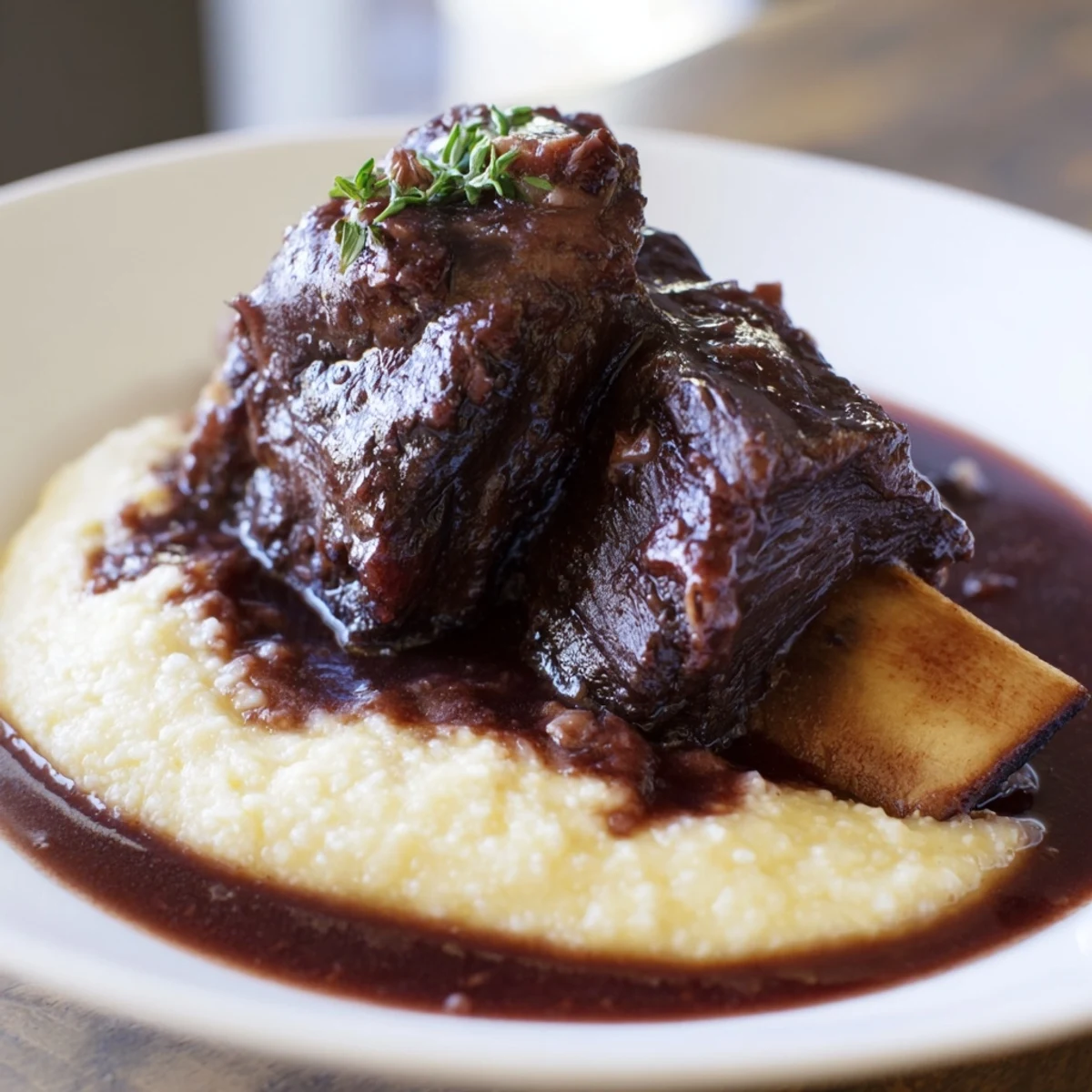
Save Bone-in short ribs are browned to develop deep flavor, then slowly braised with red wine, aromatics, and tomatoes until the meat is falling off the bone. This process creates a luxurious sauce. While the meat cooks, coarse cornmeal is simmered with milk, butter, and Parmesan to achieve a silky texture. The final dish pairs the tender, savory beef with the smooth, comforting polenta.
There's something about the smell of beef braising in red wine that makes a kitchen feel like home, even if you've never been there before. My grandmother used to make short ribs for Christmas, and the house would fill with this deep, savory perfume hours before we sat down to eat. I spent years thinking her version was untouchable until I realized the secret wasn't technique—it was time and patience, letting the oven do the heavy lifting while you sipped wine and waited. Now when I make this, I feel like I'm cooking alongside her, and honestly, that's when the dish tastes best.
I made this the first time my partner's parents came over for dinner, and I was genuinely nervous—not about burning anything, but about whether the ribs would actually be tender enough. They were perfect, and somehow that success turned into a tradition. Every time we make it now, there's this quiet moment right when we pull the pot from the oven and everyone realizes they're about to eat something really, really good.
Ingredients
- Beef short ribs (4 lbs, bone-in): Bone-in is non-negotiable—it's where the flavor comes from, and the collagen renders into the sauce and makes it silky.
- Kosher salt and freshly ground black pepper: Season generously at every stage, not just at the end; it builds depth.
- Olive oil (2 tbsp): Use something you wouldn't cry about using, but not the cheap stuff either.
- Onion, carrots, celery (diced): This is your flavor foundation—don't skip or rush the sauté.
- Garlic (4 cloves, minced): Fresh only; this isn't the place to use jarred.
- Tomato paste (2 tbsp): Let it caramelize slightly in the pan before adding liquid—it deepens everything.
- Dry red wine (2 cups): Drink what you cook with, and cook with what you'd drink; cheap wine makes cheap-tasting braise.
- Beef broth (2 cups): Homemade is ideal, but good-quality store-bought works if you taste it first.
- Crushed tomatoes (1 cup): San Marzano if you can find them; they're less acidic and more natural-tasting.
- Fresh thyme and rosemary (2 sprigs each): Dried works in a pinch, but fresh herbs in the braising liquid change everything about the final flavor.
- Bay leaves (2): Remove them at the end—leaving one in by accident is how you learn this lesson.
- Water (4 cups): For the polenta; use filtered if your tap water is heavily chlorinated.
- Polenta (1 cup coarse cornmeal): Buy the real stuff, not instant—it has more texture and taste.
- Whole milk (1 cup): This is what makes the polenta creamy and delicious, don't skip it.
- Unsalted butter (3 tbsp): Cold butter whisked in at the end gives the polenta shine.
- Parmesan cheese (1/2 cup grated): Freshly grated matters; pre-grated has anti-caking agents that make it grainy.
Instructions
- Get everything ready:
- Preheat your oven to 325°F while you prep—this gives it time to reach the right temperature. Pat the short ribs completely dry with paper towels; any moisture on the surface will steam instead of brown, and you want that deep, caramelized crust.
- Season and sear the ribs:
- Season the short ribs generously with salt and pepper on all sides—be brave with it. Heat olive oil in your Dutch oven over medium-high heat until it shimmers, then lay the ribs in carefully; you'll hear them sizzle immediately, which is exactly what you want.
- Brown everything properly:
- Don't move the ribs around; let them sit for 3-4 minutes per side so they develop that golden, crusty exterior. Work in batches if they don't all fit comfortably—overcrowding the pot means steaming, not browning. Transfer them to a plate as they finish.
- Build your flavor base:
- In the same pot, add the diced onion, carrots, and celery; the fond on the bottom is your friend here, and these vegetables will pick it up. Sauté until softened and slightly golden, about 5 minutes, then add the garlic and cook just long enough to smell it—about 1 minute, or it'll turn bitter.
- Add the tomato paste:
- Stir in the tomato paste and let it cook for 2 minutes, stirring occasionally; it'll darken and caramelize slightly, which is the whole point. This step is easy to skip, but don't—it changes the depth of your final sauce completely.
- Deglaze with wine:
- Pour in the red wine and scrape the bottom of the pot with a wooden spoon, getting all those browned bits up—that's flavor you paid for. Let it simmer for 5 minutes to reduce slightly and cook off some of the raw alcohol taste.
- Add the braising liquid and return the ribs:
- Pour in the beef broth and crushed tomatoes, then nestle in the thyme, rosemary, and bay leaves. Return the short ribs (and any juices that collected on the plate) to the pot and bring everything to a gentle simmer on the stovetop.
- Braise low and slow:
- Cover the Dutch oven and transfer it to the oven; the gentle, even heat will cook the ribs until the meat is so tender it slides off the bone. Braise for 2.5 to 3 hours—check at 2.5 hours by piercing a rib with a fork; if it's resistant, give it another 30 minutes.
- Make the polenta:
- About 30 minutes before the ribs are done, bring 4 cups of water to a boil in a saucepan. Whisk in the polenta gradually—adding it slowly prevents lumps—and reduce the heat to low; it'll bubble and pop like lava, so stir frequently with a wooden spoon to prevent scorching.
- Cook until creamy:
- Keep stirring for 20-25 minutes until the polenta is thick and pulls away from the sides of the pan. When you taste it, there should be no grittiness—it should feel smooth and creamy on your tongue.
- Finish the polenta:
- Stir in the milk, then the cold butter, then the grated Parmesan; each addition should be whisked in separately so it emulsifies smoothly. Taste and season with salt and pepper, keeping in mind the Parmesan is already salty.
- Rest and finish the ribs:
- Remove the pot from the oven and let it cool for a few minutes—you'll be reaching in to remove the herbs, and the sauce will be very hot. Discard the thyme sprigs, rosemary sprigs, and bay leaves, then skim off any excess fat from the surface with a ladle or skimming spoon; you want the sauce to taste rich, not greasy.
- Taste and adjust:
- Taste the sauce and adjust the seasoning if needed—sometimes the wine reduces more than expected and makes it sharper, so a pinch of sugar can help balance it. Sometimes it needs more salt; trust your palate here.
- Plate and serve:
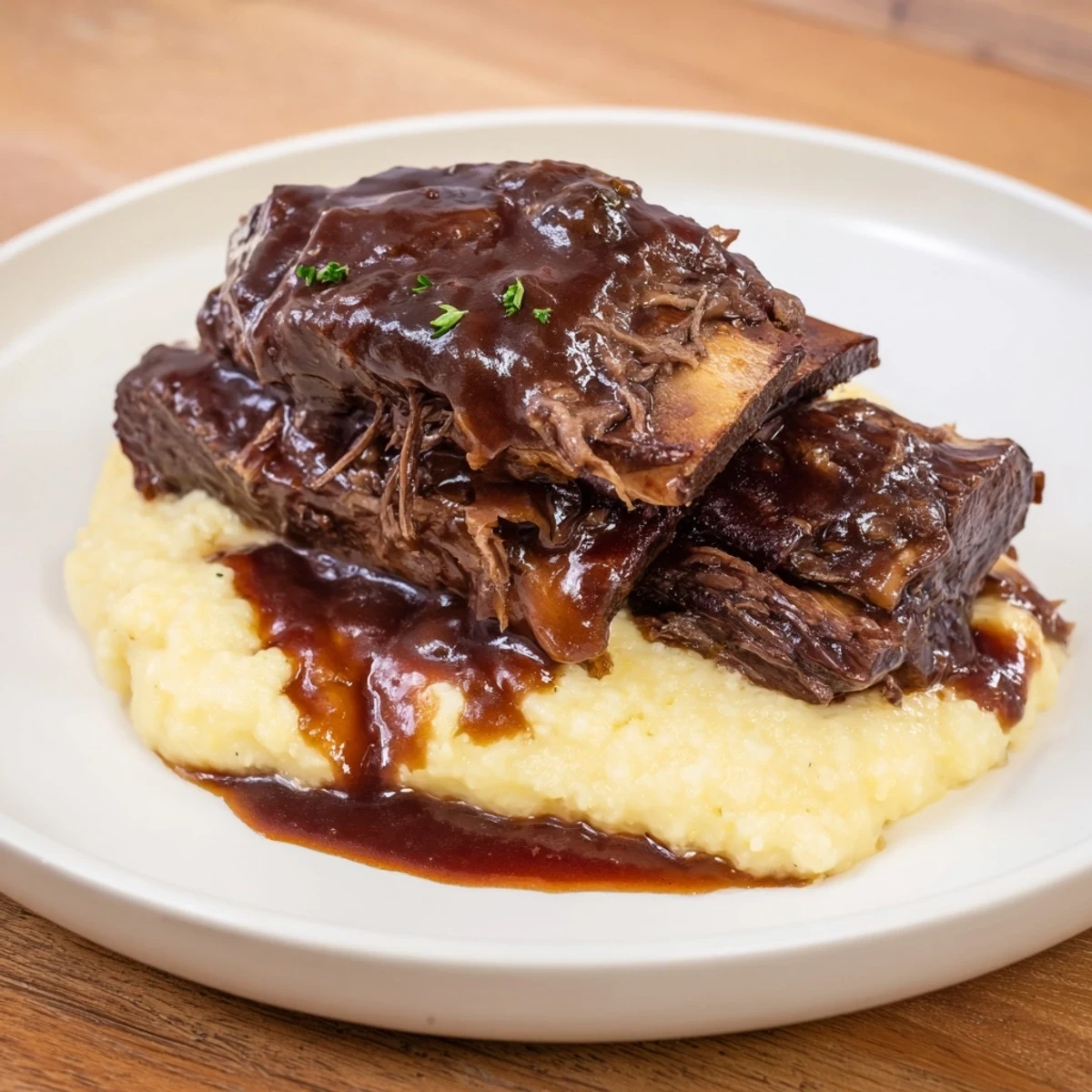
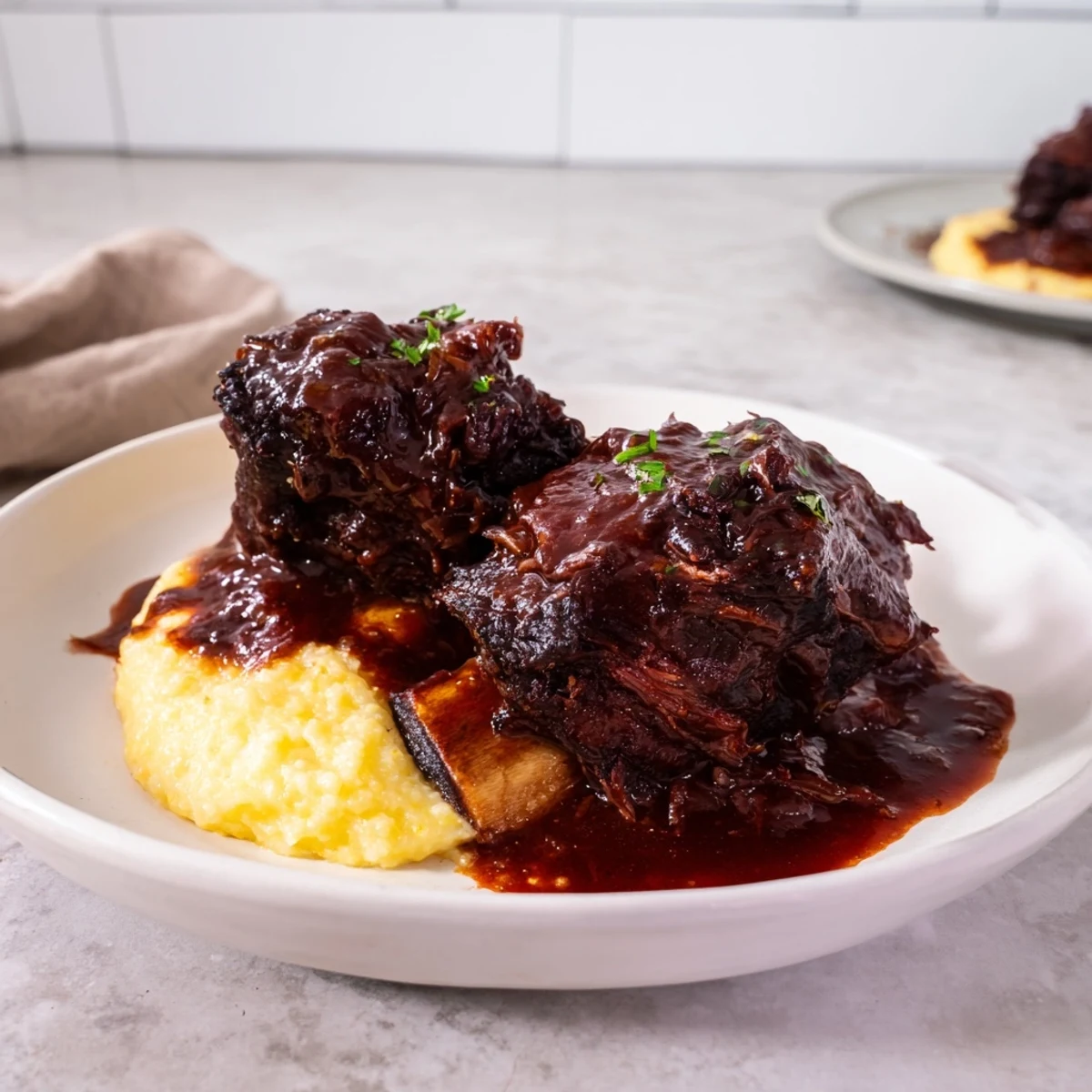
- Spoon the creamy polenta into bowls or onto plates, then arrange the short ribs on top and ladle the sauce over everything. Finish with a small handful of freshly grated Parmesan and a few torn fresh herbs if you have them.
 Save
Save Years ago, I made this for a dinner party and one of my guests asked if I'd made the stock myself—not in a critical way, but impressed. I hadn't, but that question made me understand that real time and care show in food, and people taste it. Now when someone asks me for the recipe, I don't just hand over the ingredients; I tell them the story too, because the story is half the cooking.
Why Red Wine Matters
The wine you use doesn't just add flavor; it adds acidity and tannins that break down the collagen in the meat and tenderize it while you braise. A cheap wine full of sulfites will leave a metallic taste, but a decent mid-range red wine—a Côtes du Rhône or a simple Cabernet—will round out and deepen as it cooks. I once made this with a wine I wouldn't normally drink, thinking the oven would fix it, and it didn't; the dish tasted thin and one-dimensional. Invest in something you'd actually enjoy drinking, and your braised short ribs will taste like you actually cared.
The Secret to Silky Polenta
The difference between polenta that tastes like wallpaper paste and polenta that tastes like clouds is milk and butter whisked in at the end, after the cornmeal is already cooked. If you add them too early, they coat the granules and prevent them from absorbing water, leaving you with a grainy mess. Start with just water, cook it until it's thick and smooth, then shock the system with cold milk and cold butter; the temperature change and the fats emulsify it into something almost silk-like. This is why real polenta takes longer than instant—it's worth the extra 20 minutes.
Pairing and Storage
This dish is meant to be eaten with a bold red wine, something with enough tannins to stand up to the richness of the braised meat and the earthiness of the polenta. A Barolo, a Cabernet Sauvignon, or even a good Burgundy would all be wonderful—whatever you used in the braise is a safe bet. If you have leftovers, the braised short ribs actually taste better the next day after the flavors have melded overnight in the fridge; the polenta is best fresh, but you can reheat it gently with a splash of milk and a knob of butter.
- Store leftover ribs and sauce in an airtight container for up to 4 days, or freeze for up to 3 months.
- Reheat gently on the stovetop over low heat, adding a splash of water or broth if the sauce has thickened too much.
- Make fresh polenta the day you plan to serve it, or reheat gently with milk and butter.
 Save
Save There's a reason this dish shows up on restaurant menus and special occasion tables—it feels like love made edible. Make it once, and it becomes yours.
Recipe Questions & Answers
- → How do I know when the ribs are done?
-
The beef is ready when a fork twists easily into the meat and it begins to fall away from the bone.
- → Can I make this in a slow cooker?
-
Yes, sear the meat first, then transfer everything to a slow cooker and cook on low for 8 hours.
- → What cut of meat works best?
-
Bone-in short ribs are ideal because the collagen breaks down during cooking, keeping the meat moist and tender.
- → Can I substitute the polenta?
-
Mashed potatoes or cauliflower puree are excellent low-carb alternatives that pair well with the rich sauce.
- → How do I reduce the fat content?
-
Chill the sauce overnight so the fat solidifies on top, making it easy to skim off before reheating.