
 Save
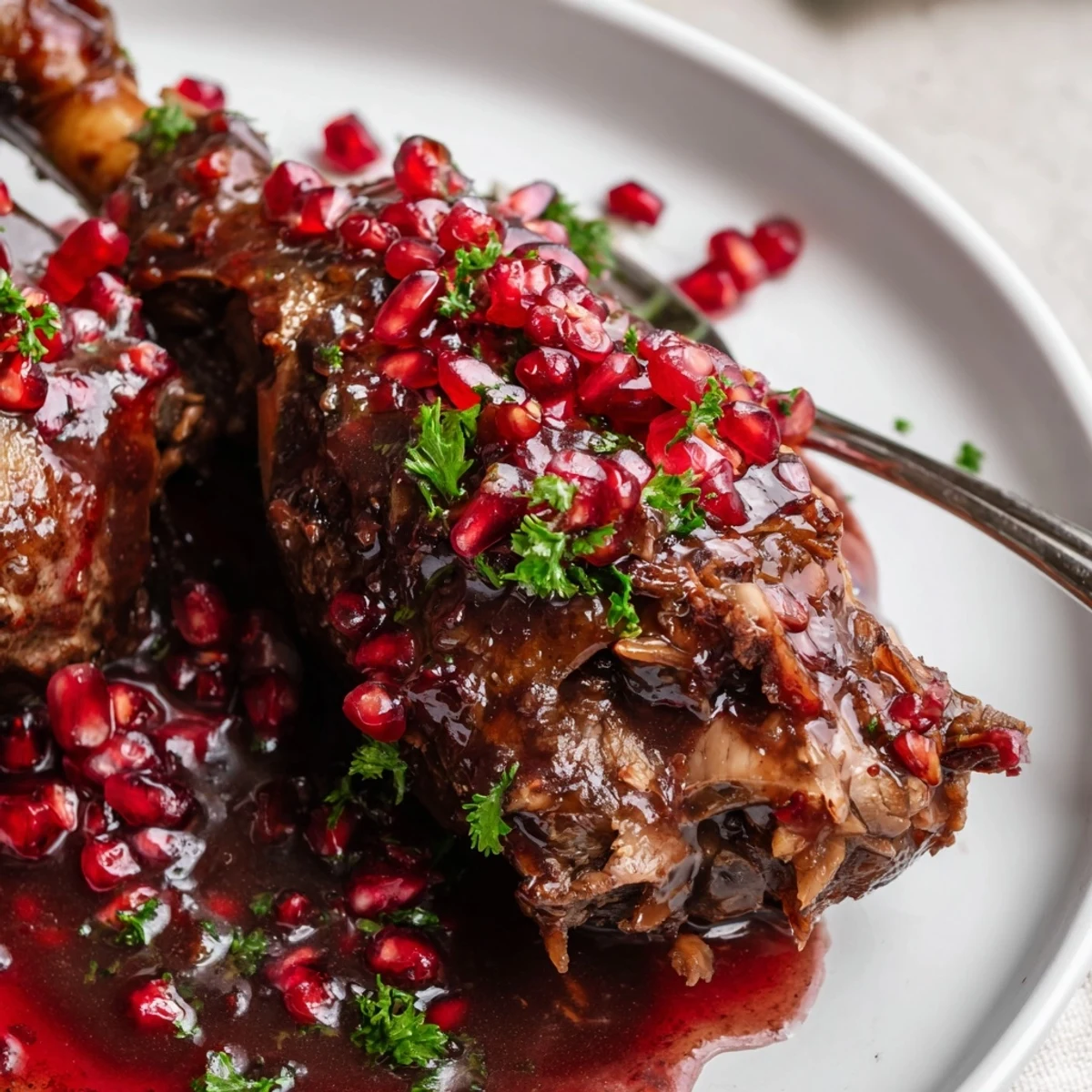
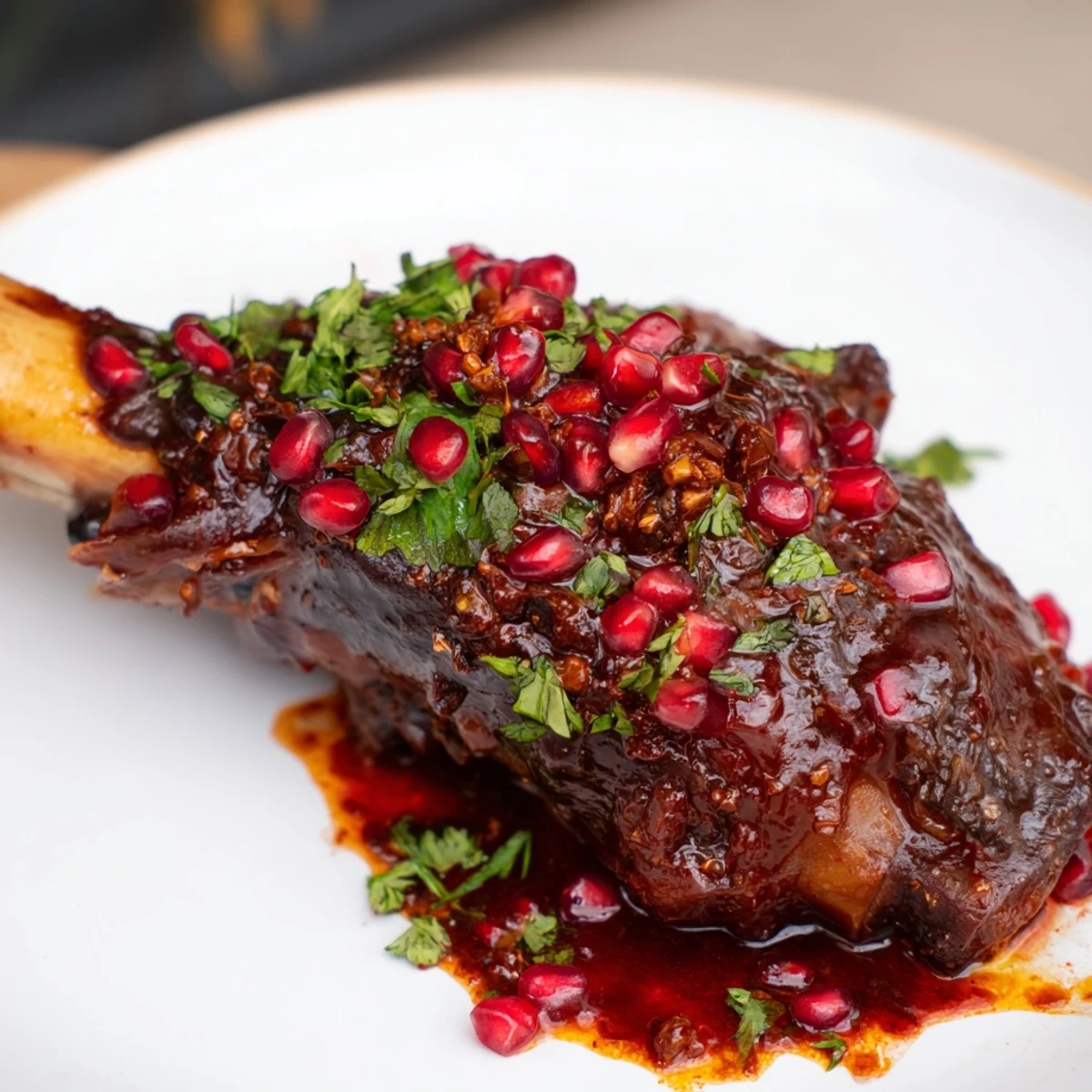
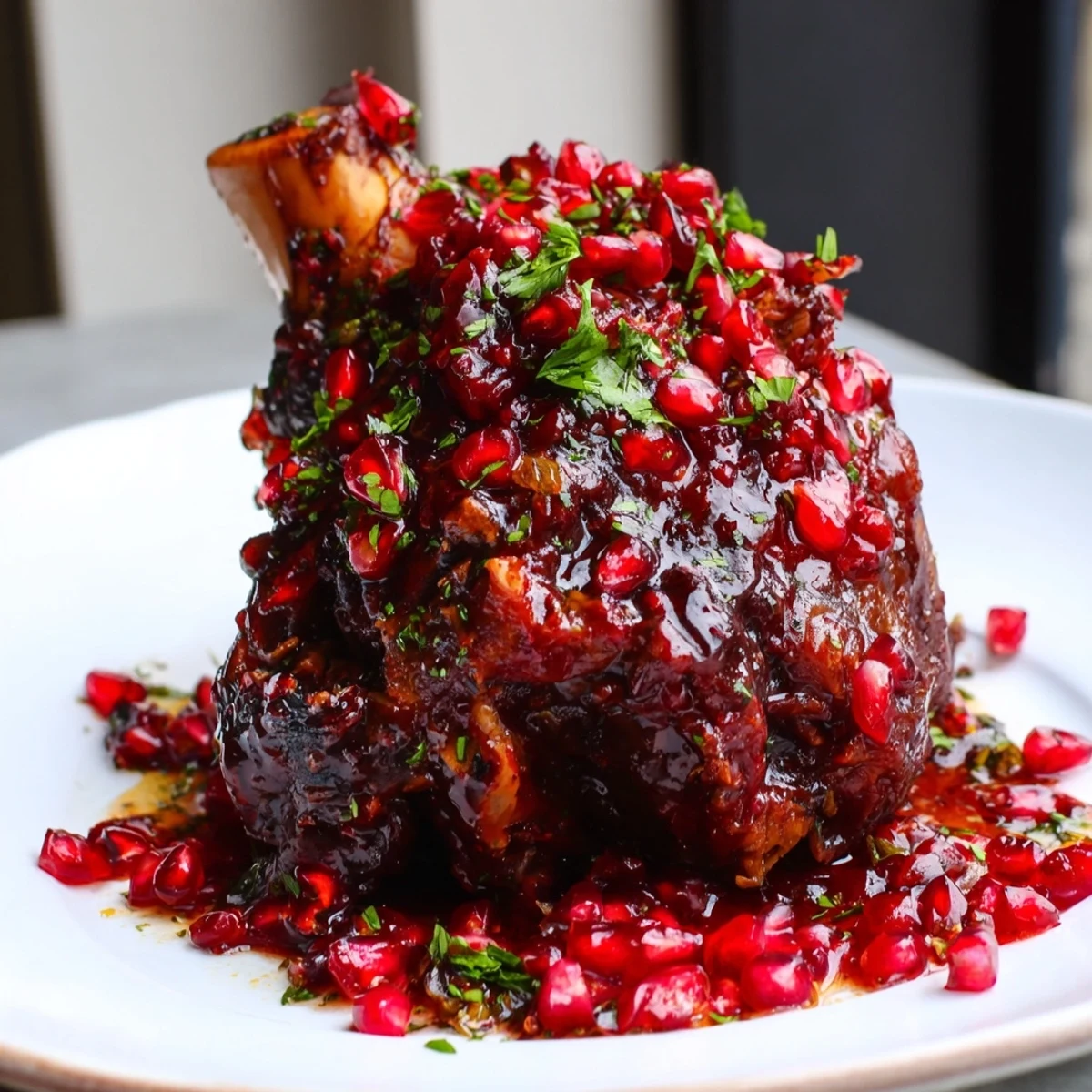
Save This dish features tender lamb shanks slow-braised with aromatic vegetables and warm spices like cumin and cinnamon. After hours in the oven, the meat is coated in a reduced pomegranate glaze, offering a perfect balance of savory and tangy flavors ideal for special occasions.
There's something about the smell of lamb braising with pomegranate that stops you mid-thought. I discovered this dish on a chilly evening when a friend brought a bottle of pomegranate molasses to my kitchen, insisting it would change how I cooked meat forever. She was right, though I didn't believe her at first. Now, whenever I braise lamb shanks, I'm transported back to that moment of skepticism turning into absolute certainty.
I made this for a dinner party once where everything that could go wrong did, and somehow the lamb shanks saved the entire night. My guest list changed three times, I forgot to buy wine until two hours before dinner, and the oven thermometer was broken. But those shanks braised quietly and patiently, filling the house with such an intoxicating aroma that people arrived early just following the smell.
Ingredients
- Lamb shanks (4, about 350–400 g each): Ask your butcher to trim them for you; this saves time and ensures even cooking throughout.
- Onion, carrots, celery (1 large, 2, 2 stalks): These form the aromatic base that deepens as they braise, so don't skip or rush the chopping.
- Garlic cloves (4, minced): Mince by hand if you have patience; the texture matters more here than perfect uniformity.
- Pomegranate juice (1 cup unsweetened): Check the label carefully—you want pure juice with no added sugar, or the glaze becomes cloying.
- Beef or lamb stock (1 1/2 cups): Homemade stock transforms this dish, but good quality store-bought works if that's your reality.
- Dry red wine (1/2 cup): Choose something you'd drink; the flavor concentrates, so mediocre wine makes mediocre braise.
- Pomegranate molasses (2 tbsp): This is the secret ingredient that makes people ask what you did differently; it's tart, concentrated, and irreplaceable.
- Olive oil (2 tbsp): Use a robust oil that won't smoke; it carries heat and flavor into every corner of the pot.
- Ground cumin, coriander, cinnamon, smoked paprika (1 tsp, 1 tsp, 1/2 tsp, 1/2 tsp): Toast these spices mentally as you add them; the warmth is what makes this feel like a hug.
- Bay leaf (1): Don't forget to fish this out before serving, or it becomes a surprise your guests won't appreciate.
- Salt and black pepper: Season generously at every stage; timid seasoning creates timid food.
- Pomegranate seeds (1/2 cup) and parsley (2 tbsp fresh, chopped): These are your finale, so save them for the very end when they brighten everything.
Instructions
- Heat your oven and season boldly:
- Set the oven to 325°F (160°C) and let it come to temperature while you work. Pat the lamb shanks dry with paper towels, then coat them generously with salt and pepper on all sides, remembering that seasoning the meat now means flavor throughout, not just on the surface.
- Sear the lamb until golden:
- Heat olive oil in your Dutch oven over medium-high heat until it shimmers and moves easily across the bottom. Working in batches if needed, place the lamb shanks in the pot and listen for that satisfying sizzle; let them sit undisturbed for 3–4 minutes on each side until a mahogany crust forms, then remove them to a plate.
- Build the aromatic base:
- In the same pot, add the chopped onion, carrots, and celery, scraping up any browned bits as you stir. After about 5 minutes when the vegetables soften and turn translucent at the edges, add the minced garlic and cook just until fragrant, which should take about 1 minute.
- Bloom the spices:
- Sprinkle in the cumin, coriander, cinnamon, and smoked paprika, stirring constantly for about 1 minute so they release their oils and perfume the whole kitchen. You'll know it's time to move on when you can smell each spice individually.
- Deglaze and simmer:
- Pour the red wine into the pot, using a wooden spoon to scrape up all those flavorful brown bits stuck to the bottom. Let it bubble away for 2 minutes, reducing slightly as the alcohol cooks off.
- Return the lamb and add the braise liquid:
- Nestle the seared lamb shanks back into the pot among the vegetables. Pour in the pomegranate juice, stock, and pomegranate molasses, then add the bay leaf and bring everything to a gentle simmer on the stovetop.
- Braise low and slow in the oven:
- Cover the Dutch oven and transfer it to the preheated 325°F oven for 2 to 2.5 hours, turning the shanks once or twice midway through. The meat is ready when it's so tender a fork slides through with barely any pressure.
- Separate meat from liquid:
- Using tongs, carefully remove the lamb shanks to a plate and tent them loosely with foil to keep warm. Discard the bay leaf and skim off any excess fat from the surface of the braising liquid using a ladle or large spoon.
- Reduce the liquid into a glaze:
- Place the pot on the stovetop over medium heat and let the braising liquid simmer uncovered for 10–15 minutes, stirring occasionally, until it reduces to a rich, glossy glaze that coats the back of a spoon. The color will deepen and the flavors will concentrate into something intensely delicious.
- Finish and serve:
- Return the lamb shanks to the glaze, turning them gently to coat all sides, and let them warm through for a minute or two. Serve each shank drizzled generously with glaze, scattered with bright pomegranate seeds and fresh parsley for contrast.
 Save
Save One Sunday, my grandmother tasted this dish and asked if I'd finally learned to cook like someone who cares. That's when I realized braised lamb isn't about impressing people; it's about showing them they're worth the time it takes to do something slowly and well.
Why This Braise Works
Braising is one of those cooking methods that seems intimidating until you understand what's actually happening: low, steady heat is breaking down the connective tissue in the meat, turning something tough into something silky. The pomegranate juice is both cooking liquid and the foundation of your glaze, so as the meat braises, the liquid concentrates and becomes more flavorful, not less. The spices aren't afterthoughts; they're partners in creating an environment where the lamb can taste like its best self. By the time the oven work is done, the meat has absorbed every layer of flavor while giving its own richness back to the liquid.
What to Serve Alongside
Saffron rice is the obvious choice, and honestly, it's obvious because it works so well that food writers never got tired of suggesting it. But creamy mashed potatoes are unexpectedly perfect here because they act as a gentle counterpoint to the tart-sweet glaze. I've also served this over couscous when I wanted something lighter, and the pomegranate glaze soaked right into those tiny grains in the most satisfying way. The key is choosing something that can hold and complement the glaze without competing with it.
Small Tricks That Matter
One afternoon, a cook friend mentioned adding a strip of orange peel to the braising liquid, and I thought she was overthinking it until I tried it. The citrus adds a subtle brightness that makes the whole dish feel more rounded, less one-note. Another discovery came from simmering the lamb just slightly longer than I thought necessary, watching the meat go from tender to almost falling apart, understanding that there's a sweet spot where texture becomes part of the elegance. And if your pomegranate juice tastes a bit flat, a teaspoon of honey whisked into the glaze at the end lifts everything without making it taste sweet.
- Orange peel: adds subtle brightness without being obvious about it.
- Patience on the braise: those last 10 minutes of low cooking time make the difference between good and memorable.
- Fresh pomegranate seeds: must go on at the very last moment so they stay jewel-like and crisp.
 Save
Save This dish has a way of making an ordinary evening feel like an occasion. Serve it with intention and watch what happens.
Recipe Questions & Answers
- → How do you know when lamb shanks are done?
-
The meat is ready when it is tender enough to pull away easily from the bone with a fork, indicating the connective tissues have broken down completely.
- → What side dishes pair well?
-
Creamy mashed potatoes, fluffy couscous, or aromatic saffron rice complement the rich glaze perfectly, soaking up the flavorful juices.
- → Can I make this in a slow cooker?
-
Yes, sear the meat first, then cook on low for 6-8 hours, adding the vegetables and liquid as directed, before finishing with the glaze reduction on the stove.
- → What does pomegranate molasses taste like?
-
It is thick, dark, and tangy with a concentrated fruit flavor that adds a distinct sour-sweet depth to savory meat dishes without being overly sugary.
- → How do I reduce the sauce?
-
Remove the meat after braising, skim the fat from the liquid, and simmer it on the stove over medium heat until it thickens into a glossy coating consistency.
- → Is this dish spicy?
-
While it uses warming spices like cinnamon and smoked paprika, it is not hot in terms of capsaicin heat; rather, it offers a deep, aromatic, and savory flavor profile.