
 Save
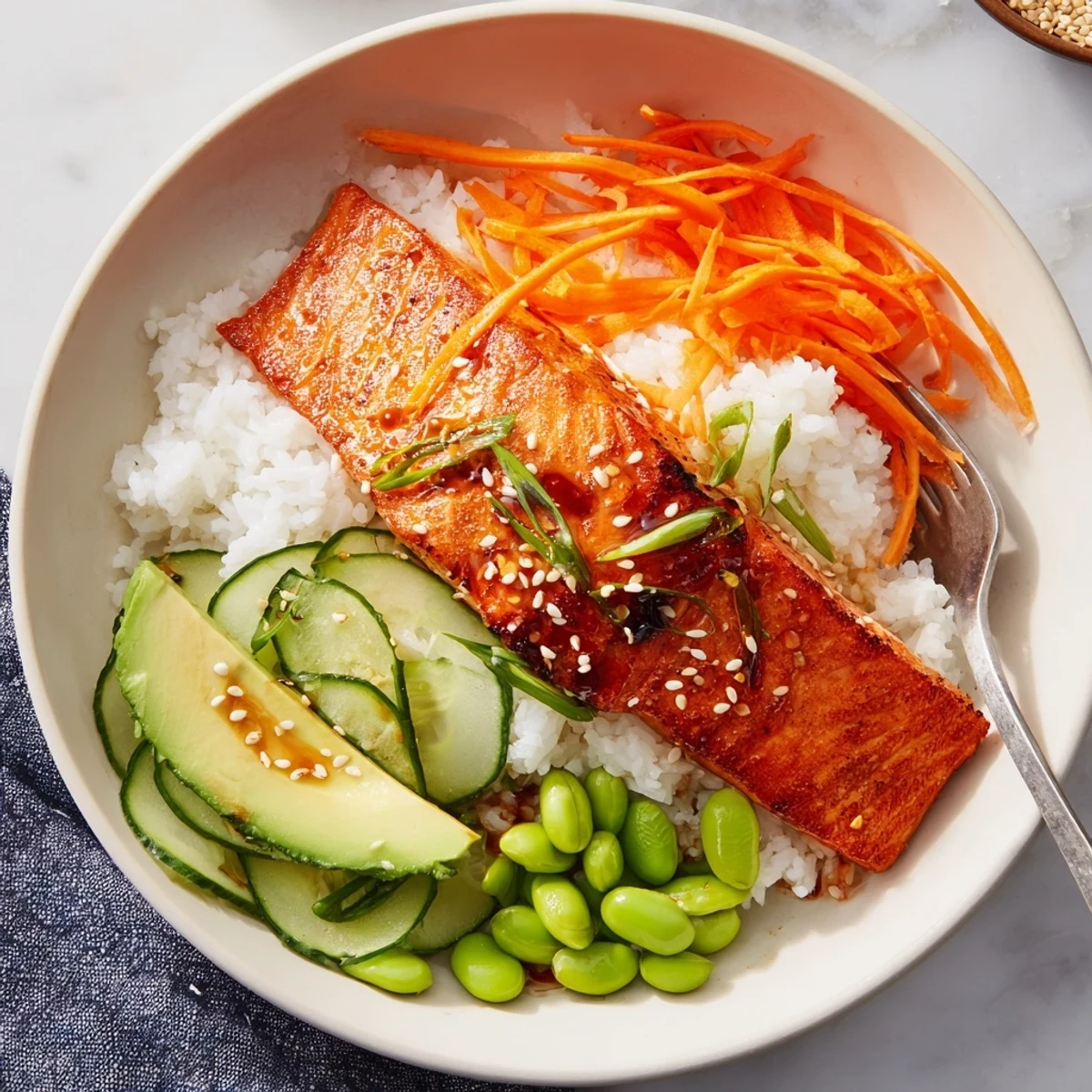
Save Combine jasmine rice with water and a pinch of salt, simmer until fluffy. Pat salmon dry, brush with soy and sesame, dust skin with cornstarch, then sear skin-side down in a hot nonstick skillet until crisp, flip briefly to finish. Prep cucumber, carrot, avocado and edamame, whisk soy, rice vinegar, honey and grated ginger for a tangy sauce. Assemble bowls with rice, vegetables and salmon; drizzle sauce and garnish with scallions and toasted sesame seeds.
Crackling salmon skin in a hot pan can instantly turn an ordinary evening into something special. I realized it the first time the aroma mingled with the sharp scent of fresh ginger and that nutty whisper of toasted sesame, brightening up my kitchen. The sound of rice gently simmering in the background set the rhythm, while my scattered lineup of vegetables waited to be brought to life. There’s something downright cheerful about assembling a bowl like this, especially when you know every layer will bring its own color and crunch.
The first time I cooked crispy salmon for a crowd was on a spring Saturday when friends lingered at my counter, peeking over their glasses to see if I’d finally mastered rice that didn’t clump. Spooning glossy sauce over each bowl while everyone reached for seconds is still one of my favorite accidental successes.
Ingredients
- Salmon fillets: Skin-on fillets are the secret to shatteringly crisp skin; always pat dry before cooking.
- Soy sauce: It’s the backbone of umami – taste yours before adding salt.
- Sesame oil: Just a drop coats the salmon in toasty flavor; too much can overwhelm.
- Cornstarch: A light dusting promises extra crunch on the salmon skin.
- Salt and pepper: Seasoning simply but thoroughly brings out the fish’s sweetness.
- Jasmine or sushi rice: These types stay fluffy and slightly sticky, which holds the bowl together perfectly.
- Water: If you swap for broth, expect deeper, richer flavor in the rice.
- Cucumber: Cool, crisp and always added right before serving for freshness.
- Carrot: Julienned carrots bring a bright crunch; a mandoline makes prep so easy.
- Avocado: Sliced just before serving to dodge browning and keep it silky.
- Edamame: Steamed and sprinkled in for satisfying, plant-based protein.
- Scallions: Slice extra thin to lend a mild oniony finish.
- Toasted sesame seeds: Sprinkle as the bowls are plated – they smell so good when freshly toasted.
- Nori strips (optional): If you want a savory, slightly oceanic crunch, don’t skip them.
- Rice vinegar: Sharpens the sauce and balances out the sweetness.
- Honey or maple syrup: Either works; just aim for a subtle sweet note.
- Sriracha (optional): A tiny drizzle wakes everything up – adjust to your spice level.
- Fresh ginger: Grate it right into the sauce for a warming bite.
Instructions
- Cooking Fluffy Rice:
- Rinse the rice until the water runs clear, letting each swirl reveal more starchy clouds – that’s how you know it’s ready. Combine rice, water, and salt in a saucepan, bring to a boil, then cover and simmer gently; the kitchen fills with floral notes as it finishes.
- Marinating the Salmon:
- Pat each salmon fillet dry and brush with a glossy mixture of soy sauce and sesame oil. A light coat of cornstarch on the skin side creates the spectacular sizzle once it hits the pan.
- Getting That Crisp Skin:
- Heat your skillet until a drop of water skitters across the surface, then lay the salmon skin-side down. Press gently with a spatula and listen for that snap, leaving the fillet undisturbed until the skin is golden and irresistible; flip and finish cooking until opaque.
- Prepping Vegetables:
- Slice, julienne, and steam the toppings while the salmon cooks, arranging them in tidy piles for easy assembly. These fresh elements add a lively crunch to every bite.
- Mixing The Sauce:
- Whisk soy sauce, rice vinegar, honey or maple, sriracha (if you like it hot), and grated ginger in a small bowl until glossy and aromatic.
- Assembling Your Bowls:
- Spoon hot, fluffy rice into each bowl, then make small nests for the vegetables and scatter in the steamed edamame and creamy avocado. Place salmon fillets gently on top, drizzle with sauce, and shower with scallions, sesame seeds, and nori strips if using.
 Save
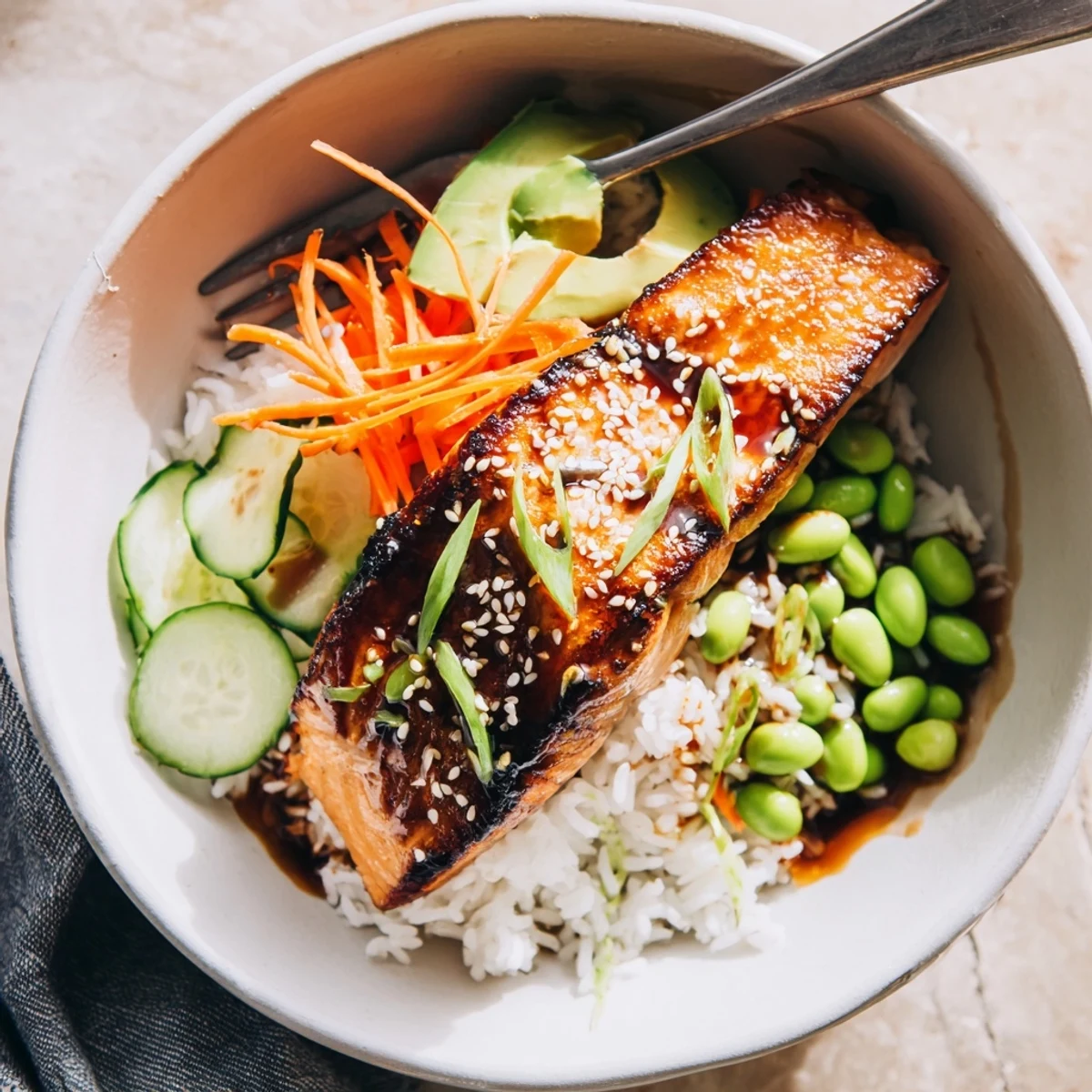
Save One afternoon, my little cousin learned what edamame is while clumsily arranging her own toppings in the bowl, declaring it her new favorite green. Watching her discover each texture made the meal feel like a tiny adventure, and now any time I make this, I remember everyone building their ‘perfect’ bite from all the options.
Sauce Secrets That Make The Bowl Pop
I spent too many tries with bland sauces until I started grating fresh ginger straight into my mixing bowl – suddenly, the sauce was alive and zingy. Timing matters too: add the sauce just before serving, and let it pool around the rice so every bite gets a punch of flavor without turning soggy.
Meal Prep For A Busy Week
These bowls are lifesavers when prepped in parts. I like to steam a batch of edamame, chop my veggies, and cook rice ahead – then dinner feels almost instant after a long day.
Small Tweaks For Big Results
I realized that switching up the base (like subbing brown rice or mixing in quinoa) can totally refresh the bowl and make it new again. Playing with pickled vegetables or crunchy radishes turns a reliable favorite into something bright and surprising, and sometimes I toss in fresh herbs for extra lift.
- Squeeze a little lime over top for a citrusy finish.
- If your salmon sticks, let it loosen by itself – patience pays off.
- Don’t stack hot salmon on avocado or it will wilt – keep them side by side.
 Save
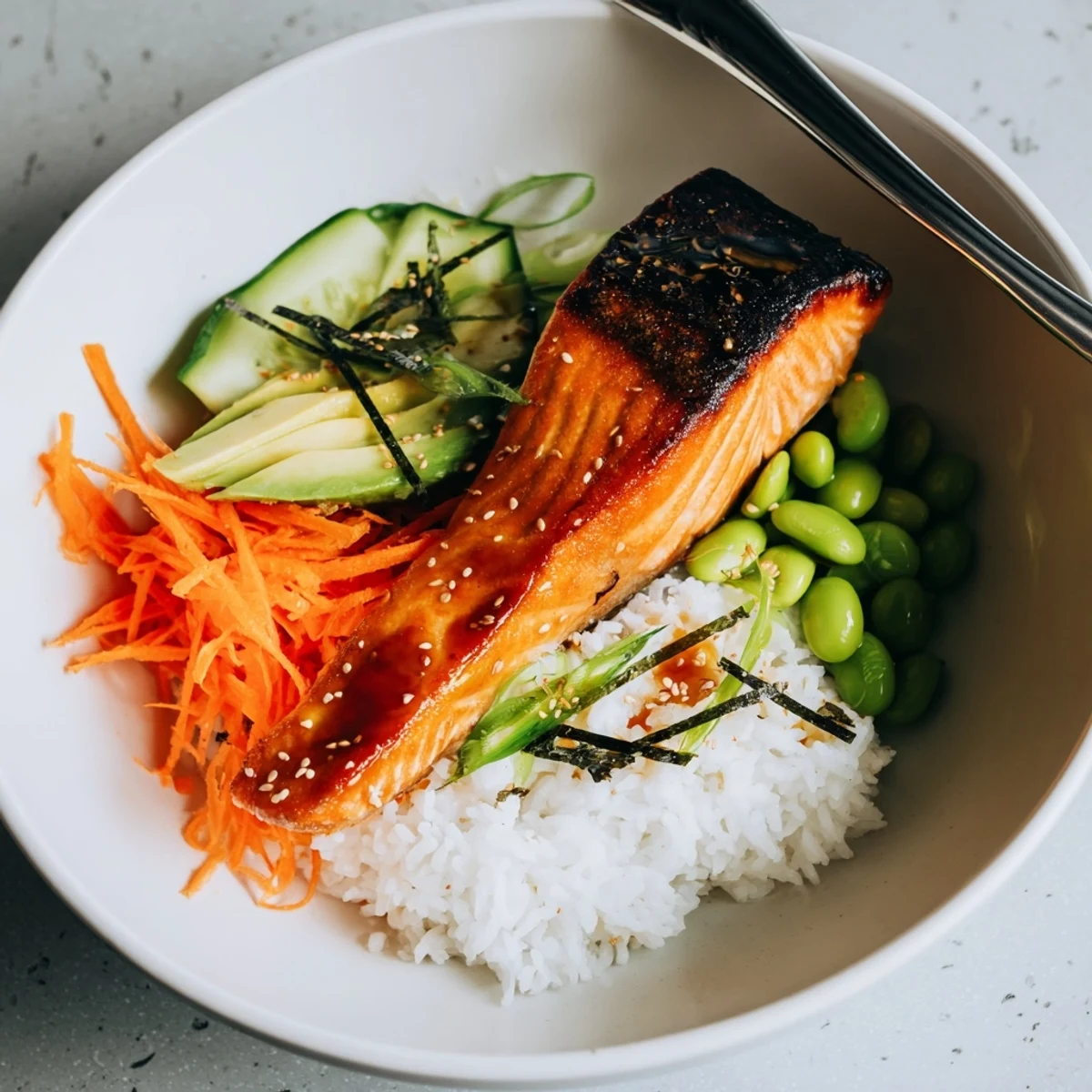
Save Bringing everything to the table as a build-your-own spread guarantees happy, eager eaters (and never any leftovers). I hope your kitchen fills with as many colors, smells, and little victories as mine does when salmon and rice come together this way.
Recipe Questions & Answers
- → How do I get extra-crispy salmon skin?
-
Pat the fillets very dry, dust the skin lightly with cornstarch, and start skin-side down in a hot, lightly oiled nonstick skillet. Press gently for the first minute and cook undisturbed until the skin releases and turns deeply golden.
- → Which rice works best for this bowl?
-
Jasmine or sushi rice yield the fluffiest base and a slightly sticky texture that holds bowls together. For nuttier flavor and more fiber, swap in brown rice or quinoa and adjust cooking time accordingly.
- → Can I make this gluten-free?
-
Yes. Use tamari instead of soy sauce and check labels on any packaged ingredients. The rest of the components—rice, salmon, vegetables and sesame—are naturally gluten-free.
- → How can I tell when the salmon is done?
-
Look for opaque flesh that flakes easily with a fork and registers about 125–130°F (52–54°C) for medium doneness. Cooking time varies by thickness; a 150 g fillet typically needs 4–5 minutes skin-side down and 2–3 minutes after flipping.
- → Any tips for making bowls ahead or reheating?
-
Cook rice and sauce ahead and store separately. Keep avocado and delicate toppings aside until serving. Reheat salmon briefly in a hot skillet skin-side down to revive crispness, or warm gently in the oven to avoid drying out.
- → What are good sauce or topping variations?
-
Try swapping honey for maple, add rice vinegar for brightness, or replace sriracha with gochujang for depth. Pickled ginger, radishes, extra lime juice or toasted nuts add texture and contrast.