
 Save
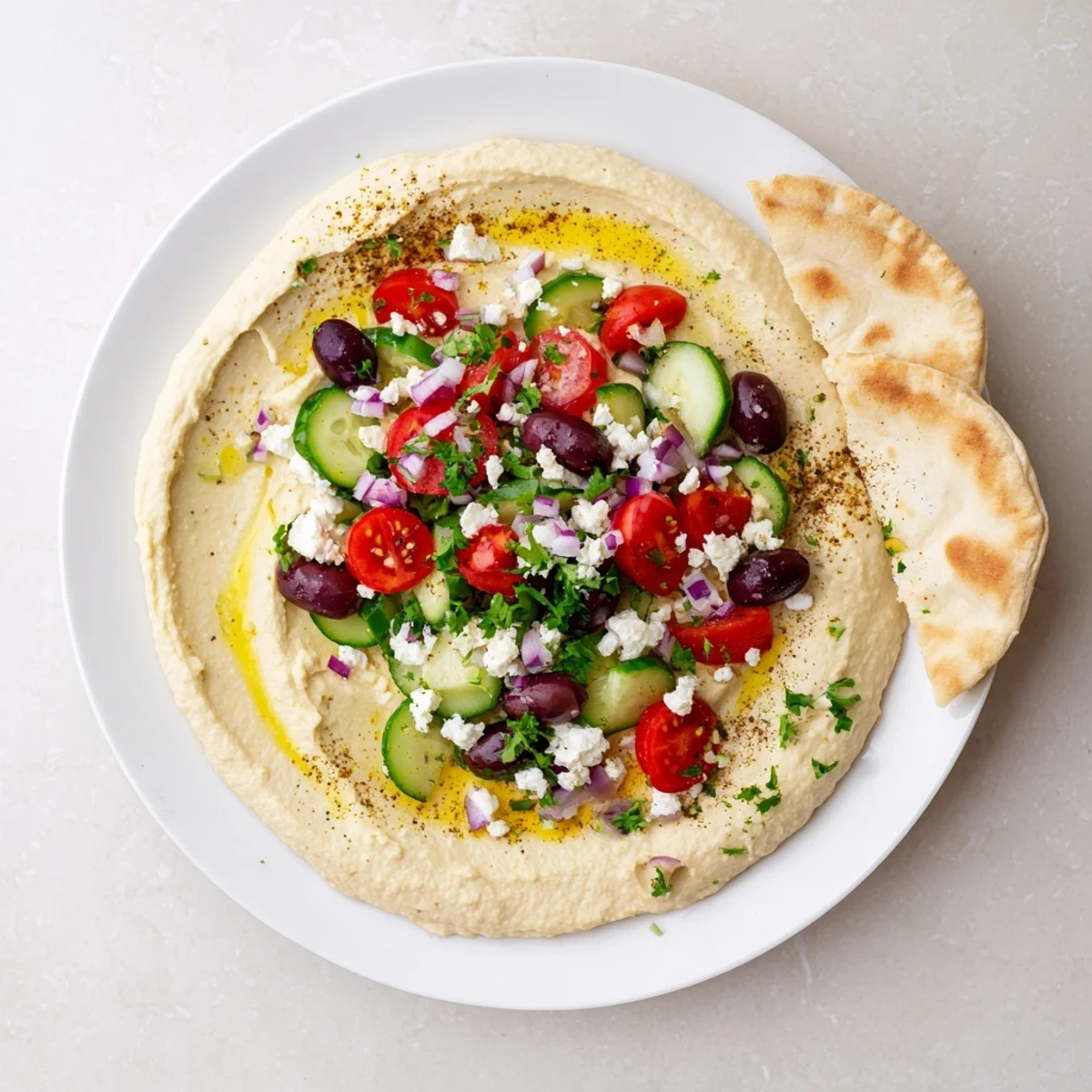
Save This vibrant Mediterranean dish starts with a smooth, creamy base blended from chickpeas, tahini, garlic, and lemon. The hummus gets topped with an array of fresh garnishes including sweet cherry tomatoes, crisp cucumber, briny Kalamata olives, tangy crumbled feta, and sharp red onion. A drizzle of olive oil and sprinkle of fresh parsley, black pepper, and smoked paprika adds the finishing touch. Ready in just 15 minutes, this colorful spread serves six and works beautifully as part of a mezze platter or alongside pita chips and warm flatbread.
The afternoon sun hit my kitchen counter just right as I spread that first batch of hummus into a shallow bowl, creating those little ridges that catch all the good stuff. My roommate wandered in, attracted by the sharp smell of lemon and garlic hitting the air. We ended up standing there with forks, eating it straight from the dish instead of waiting for pita bread like civilized people. That’s when I knew this wasn’t just hummus—it was the kind of food that makes people abandon their manners.
I brought this to a friend’s summer rooftop gathering last year, setting it down on a weathered wooden table between bowls of olives and warm flatbread. Within ten minutes, someone asked for the recipe, and suddenly I was fielding questions about tahini brands and the secret to restaurant-style smoothness. The bowl was empty before the main dishes even came out. Now it’s my go-to when I want to show up empty-handed but still feel like I contributed something substantial.
Ingredients
- 2 cups canned chickpeas: Rinse them thoroughly until the water runs clear—this removes the metallic taste that can sneak into your final dip
- 1/3 cup tahini: The creamy foundation that transforms chickpeas into something luxurious, so don’t skip it or substitute with peanut butter
- 2 tbsp extra virgin olive oil: Use the good stuff here because you’ll taste that peppery finish in every bite
- 2 tbsp fresh lemon juice: Brightens everything and cuts through the richness, plus it helps break down the chickpeas for smoother blending
- 1 clove garlic: One fresh clove is plenty—raw garlic gets stronger as it sits, so err on the side of caution
- 1/2 tsp ground cumin: Adds that earthy warmth that makes people ask what’s different about your hummus
- 1/2 tsp salt: Enhances all the flavors without making it taste salty
- 2–4 tbsp cold water: The secret weapon that transforms grainy into silky smooth
- 1/2 cup cherry tomatoes: Their sweetness balances the savory hummus underneath
- 1/2 cup cucumber: Adds crunch and freshness that keeps each bite interesting
- 1/4 cup Kalamata olives: Those briny, salty bites cut through the creaminess perfectly
- 1/4 cup feta cheese: Creamy, tangy, and absolutely essential even though you can skip it for vegan friends
- 2 tbsp red onion: Sharp and crisp, providing little pops of flavor throughout
- 2 tbsp fresh parsley: Not just garnish—it brings a bright, herbal freshness that lightens the whole dish
- 1 tbsp olive oil for drizzling: Finish with a flourish and let that golden ribbon run through all the toppings
Instructions
- Blend your base until it sings:
- Throw the chickpeas, tahini, olive oil, lemon juice, garlic, cumin, salt, and two tablespoons water into your food processor. Let it run for a solid three minutes, stopping to scrape down the sides and taste for seasoning. If it’s still not as smooth as you’d like, add another tablespoon of water and keep going—patience here is what separates good hummus from great hummus.
- Create those signature swirls:
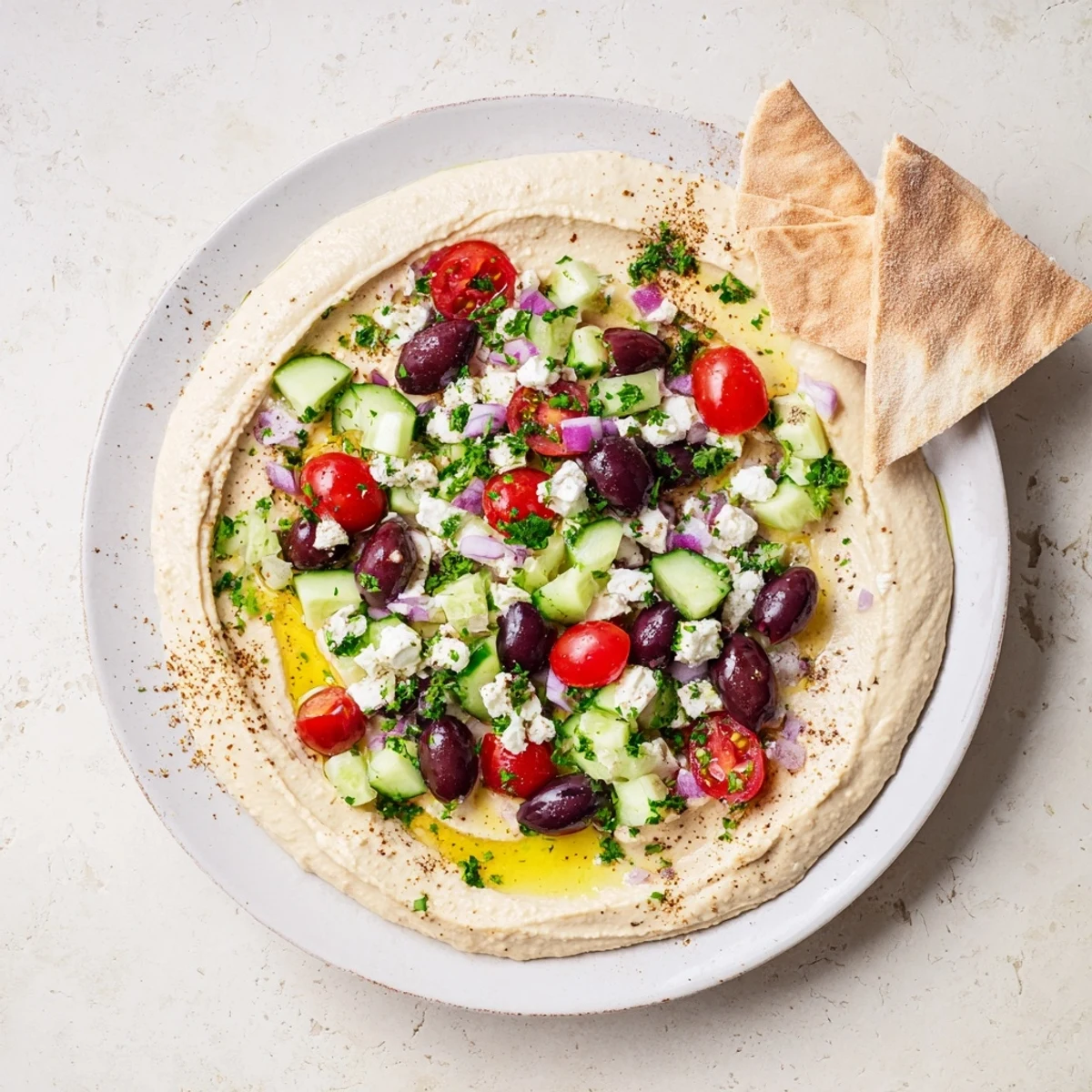
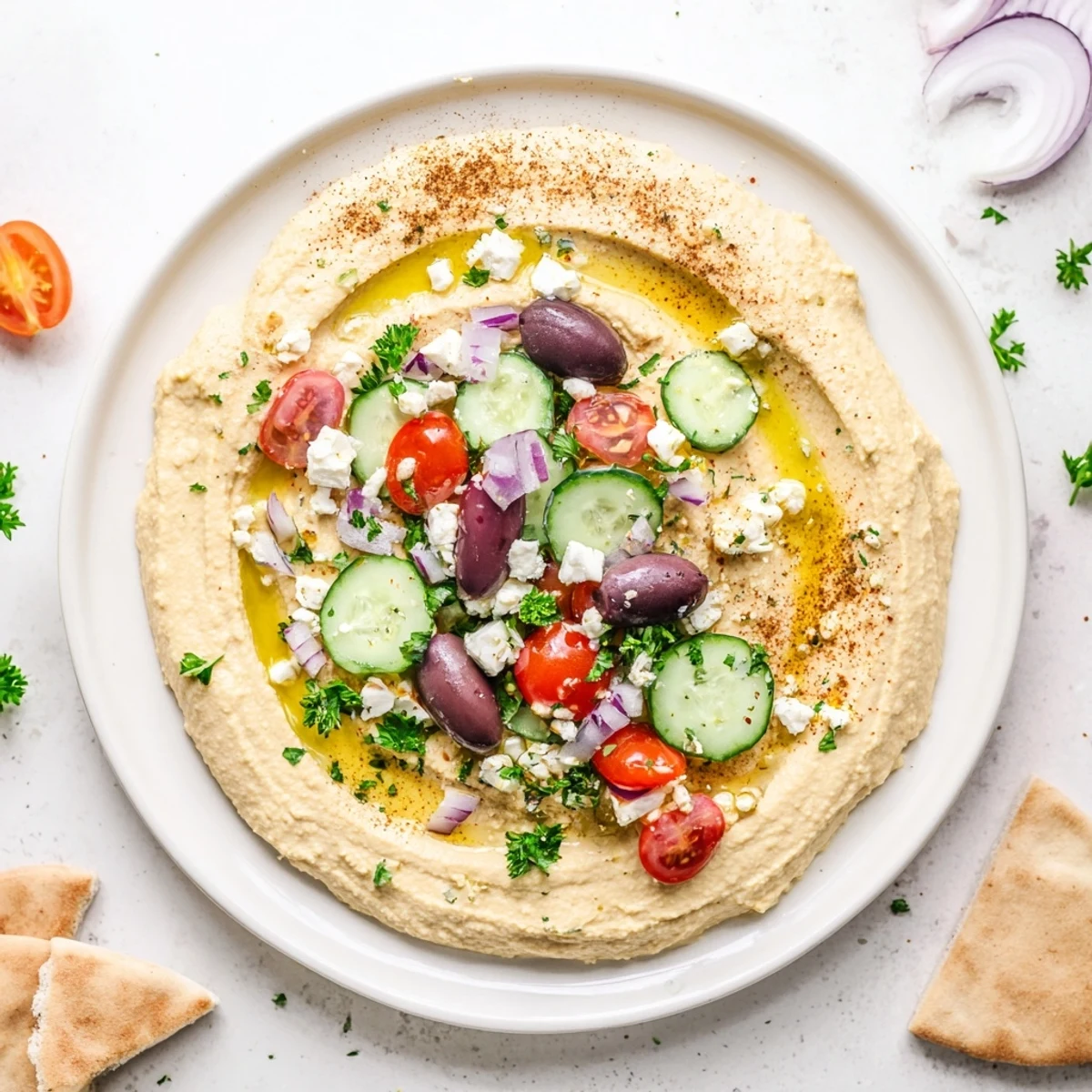
- Transfer the hummus to a wide, shallow bowl and use the back of your spoon to push it around in circular motions, making little ridges and valleys. This isn’t just for looks—those grooves catch all the toppings and olive oil, creating flavor pockets in every bite.
- Artfully arrange your toppings:
- Scatter the tomatoes, cucumber, olives, feta, and red onion across the surface like you’re composing a painting. Think about color contrast and bite variety—you want every spoonful to have a bit of everything.
- Finish with flourish:
- Drizzle that final tablespoon of olive oil across the top, letting it pool in the valleys you created earlier. Sprinkle with parsley, a generous grind of black pepper, and that optional pinch of smoked paprika for warmth.
 Save
Save My mother-in-law took one bite during a family dinner and quietly asked if I’d teach her my method. Now she makes it for every gathering, claiming she invented the recipe. That’s exactly the kind of recipe theft I live for—food that travels from kitchen to kitchen, gathering stories and little adjustments along the way.
Make It Your Own
Some days I roast red peppers and fold them into the base for a smoky undertone that changes everything. Other times I swap parsley for fresh dill or mint, especially when I’m craving something brighter and more herbaceous. The toppings are infinitely adaptable too—roasted eggplant, pickled onions, or even spiced ground lamb can transform this from simple appetizer to substantial meal.
Texture Secrets
Reserving a handful of whole chickpeas to fold in after blending creates these satisfying little pops of texture throughout. You can also toast extra cumin and coriander seeds in a dry pan until fragrant, then crush them and sprinkle over the top for this incredible aromatic experience. The contrast between smooth and substantial is what keeps people coming back for just one more bite.
Serving Strategy
Set this out with warm flatbread brushed with olive oil and a scattering of vegetable crudités in different colors. The variety keeps things interesting and lets guests build their perfect bite.
- Let the hummus come to room temperature for maximum creaminess before serving
- Make double the toppings because they disappear faster than the dip itself
- Keep extra lemon wedges on hand for those who love an extra bright hit
 Save
Save Simple food, prepared with care and served generously, creates the kind of moments that stick in your memory long after the last crumb is gone.
Recipe Questions & Answers
- → How long does homemade hummus keep?
-
Store the base in an airtight container in the refrigerator for up to one week. Add fresh toppings just before serving, as pre-garnished portions may become soggy after 1-2 days.
- → Can I make this without a food processor?
-
A high-powered blender works well too. For a rustic texture, mash chickpeas by hand with a fork or potato masher, though the result will be chunkier rather than smooth.
- → What can I substitute for tahini?
-
Try creamy almond butter, sunflower seed butter, or additional olive oil. The flavor profile will shift slightly but still create a delicious spread.
- → How do I achieve the smoothest consistency?
-
Use cold water, blend for 2-3 minutes, and scrape down the sides frequently. Some cooks briefly microwave the chickpeas with baking soda to help break down skins.
- → What other toppings work well?
-
Roasted red peppers, marinated artichokes, pine nuts, toasted chickpeas, fresh herbs like dill or mint, and a sprinkle of za'atar all complement the creamy base beautifully.