
 Save
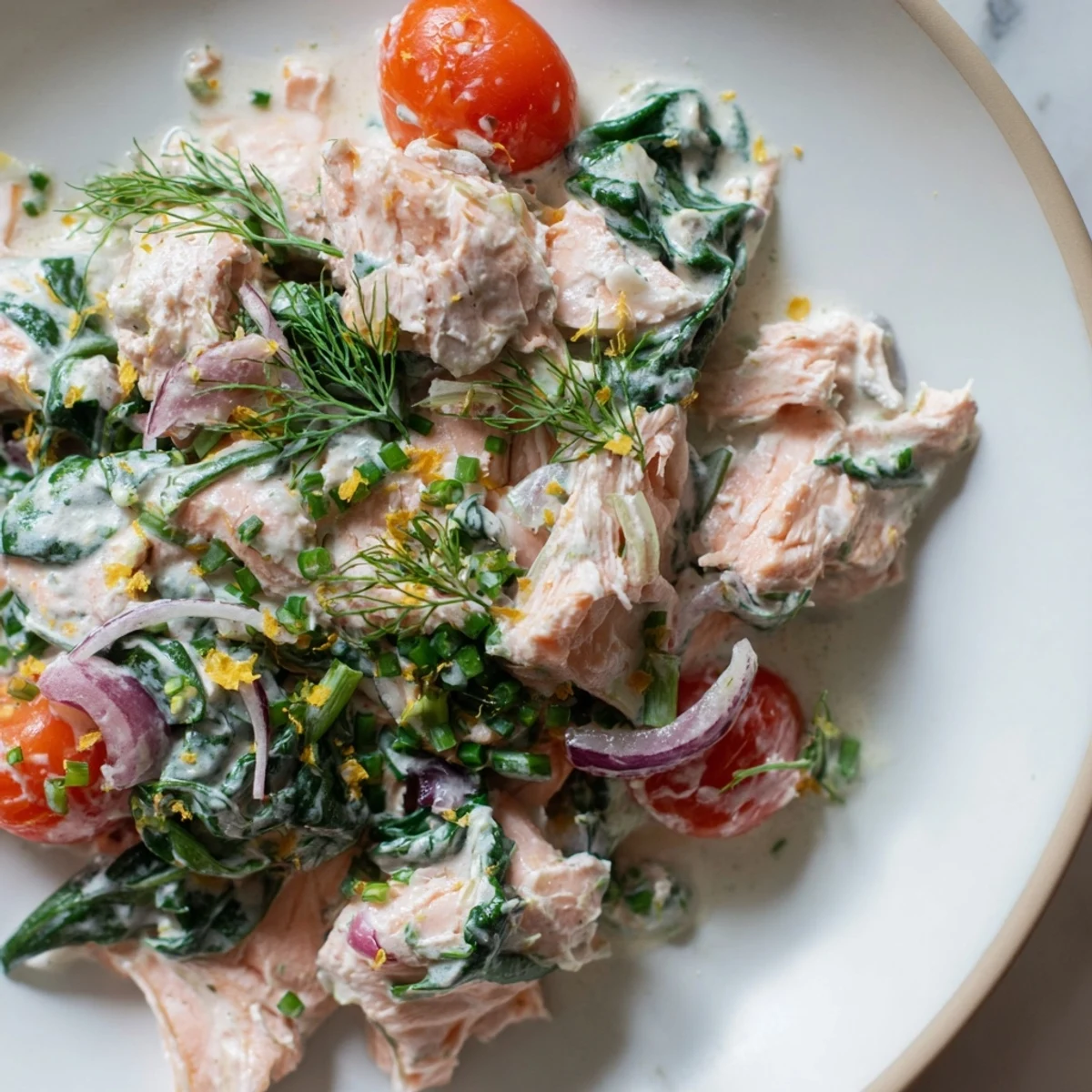
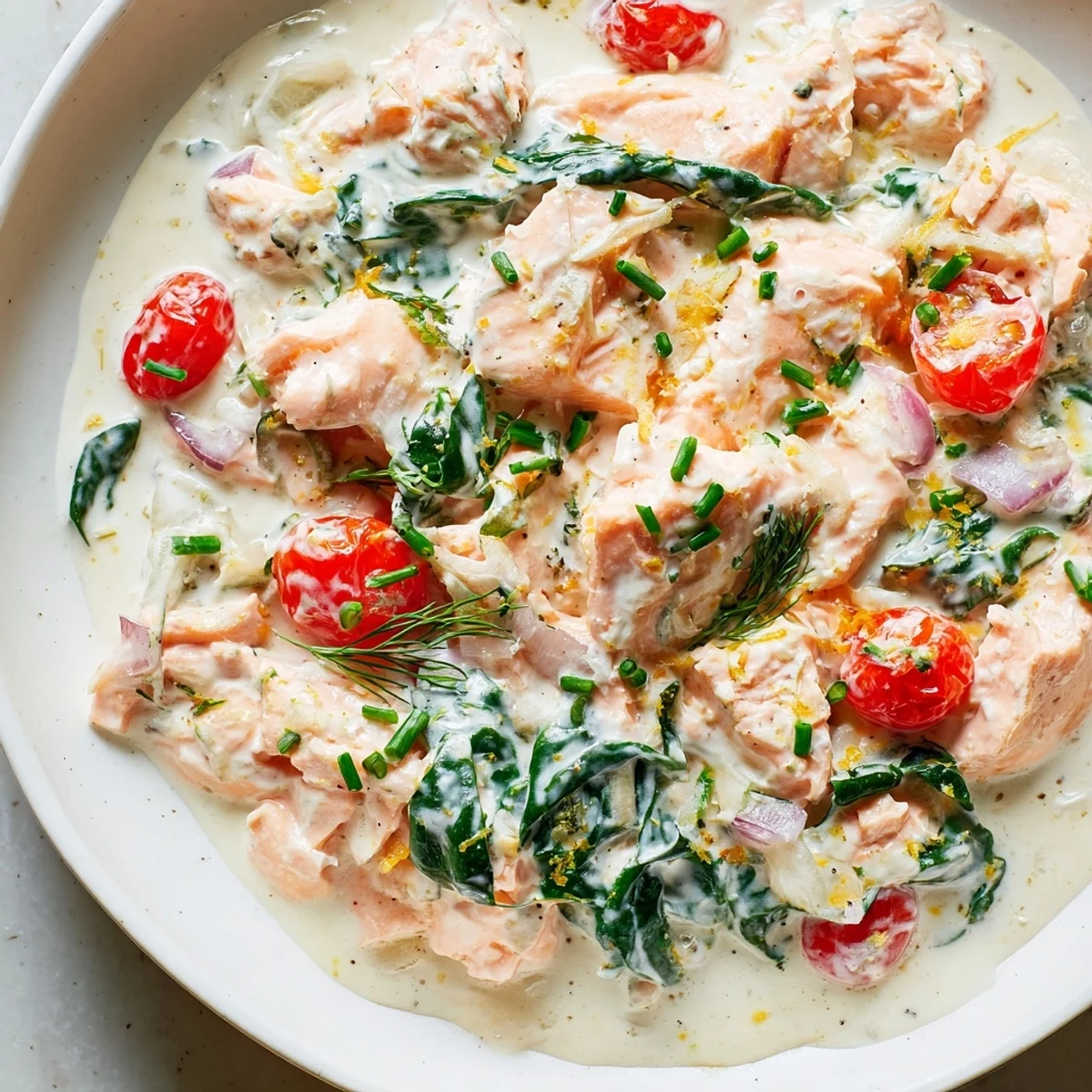
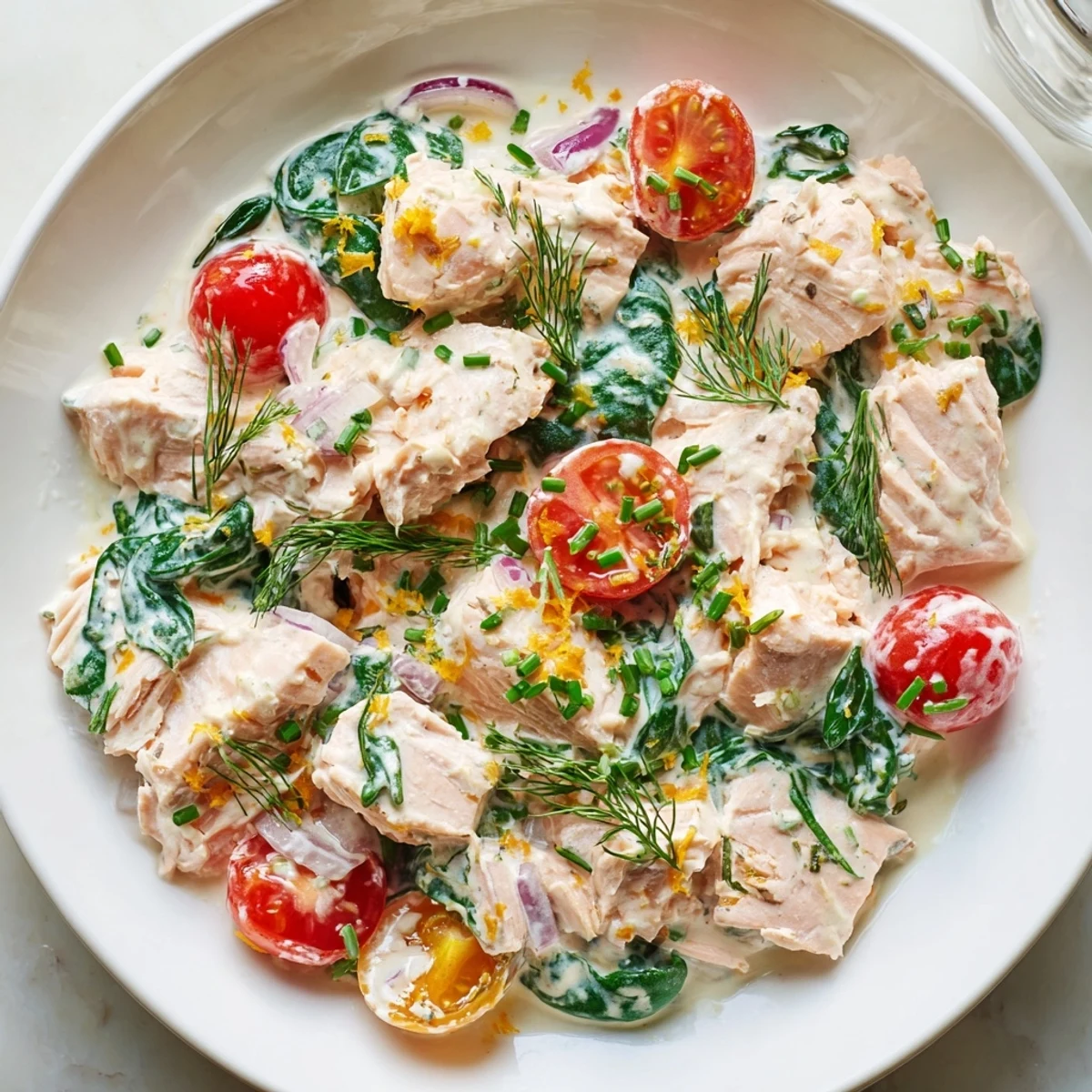
Save This healthy creamy leftover salmon skillet turns yesterday's cooked salmon into a rich, satisfying meal in just 25 minutes. Flaked salmon is gently warmed in a luscious sauce made from Greek yogurt and light cream cheese, then brightened with fresh lemon juice, zest, and dill.
Baby spinach and cherry tomatoes add color, nutrients, and freshness, while keeping the dish low in carbs. Each serving packs 32 grams of protein and only 6 grams of carbohydrates, making it ideal for pescatarian, low-carb, and gluten-free diets.
Serve it on its own or over quinoa, rice, or whole-grain pasta for a complete lunch or dinner that the whole family will enjoy.
My fridge held nothing but leftover salmon from last night and half a container of Greek yogurt I kept forgetting about, and somehow that sad inventory became the best lunch I had all week. The salmon flaked into pink curls, the yogurt turned into something unexpectedly silky, and fifteen minutes later I was eating standing at the counter because I could not wait to sit down. This recipe is proof that the best meals rarely start with a plan.
I made this for my neighbor Sarah after she mentioned she always throws out leftover fish because she never knows what to do with it. She texted me that night asking for the recipe, and now apparently it is a Tuesday staple at her house. There is something deeply satisfying about rescuing food from the trash and turning it into a meal people actually request.
Ingredients
- 2 cups cooked salmon (flaked, skin and bones removed): Leftover salmon works beautifully here because it has already released much of its moisture and will soak up the creamy sauce like a sponge.
- 1/2 cup Greek yogurt (or reduced-fat creme fraiche): This is the clever part because yogurt gives you that rich tang without the heaviness of cream, and it melts into the broth like magic.
- 1/4 cup light cream cheese (softened): Let it sit on the counter while you chop vegetables so it blends smoothly without clumping.
- 1 cup baby spinach (chopped): A quick rough chop helps it wilt faster and distribute more evenly through every bite.
- 1 cup cherry tomatoes (halved): Their natural sweetness balances the tang of the yogurt and lemon in a way regular tomatoes cannot quite match.
- 1/2 small red onion (thinly sliced): Slice it as thin as you can manage because the pieces cook down sweet and soft rather than staying sharp.
- 1 clove garlic (minced): One clove is enough here to add warmth without stealing the spotlight from the salmon.
- 1/2 cup low-sodium chicken or vegetable broth: This is the liquid backbone that brings everything together into a sauce instead of a dry scramble.
- 1 tablespoon fresh dill (chopped, or 1 teaspoon dried dill): Dill and salmon are old friends for good reason, so do not skip this even if you have to use the dried version.
- 1/2 teaspoon lemon zest: The zest carries aromatic oils that juice alone cannot provide, and it brightens the whole dish.
- Juice of 1/2 lemon: Fresh is non-negotiable here because bottled lemon juice tastes flat and metallic against the fish.
- 1/4 teaspoon black pepper and 1/4 teaspoon salt (to taste): Start light and adjust at the end since the salmon and broth both bring their own salt.
- 2 tablespoons chives (chopped): Scattered on top at the last second for a fresh oniony crunch that wakes everything up.
- Cooked quinoa, rice, or whole-grain pasta (optional): Not strictly necessary but a bed of grains turns this from a skillet dish into a full meal.
Instructions
- Soften the aromatics:
- Warm a large non-stick skillet over medium heat with a small splash of oil or broth, then add the sliced red onion and minced garlic, stirring until the onion turns translucent and your kitchen smells impossibly inviting, about two to three minutes.
- Wilt the greens:
- Toss in the chopped spinach and halved cherry tomatoes, giving them two to three minutes to collapse gently so the spinach shrinks down and the tomatoes release just enough juice to start forming a natural sauce.
- Build the creamy base:
- Pour in the broth and add the softened cream cheese and Greek yogurt, stirring with a spatula until everything melts together into a smooth, glossy sauce that coats the back of your spoon, roughly two minutes.
- Fold in the salmon:
- Gently stir the flaked salmon into the sauce along with the dill, lemon zest, lemon juice, salt, and pepper, then let it warm through for two to three minutes without stirring too aggressively so the fish stays in beautiful tender chunks.
- Taste and serve:
- Give it one final taste and add more salt or lemon if needed, then spoon it hot onto plates or grain beds and shower with chopped chives before it disappears.
 Save
Save The first time I served this to friends I watched everyone go quiet mid-conversation, which is honestly the highest compliment a cook can receive. Someone asked if I had used heavy cream, and when I said Greek yogurt they actually laughed in disbelief.
Making It Your Own
Kale or Swiss chard can step in for spinach if you want something earthier and more substantial, though you will need an extra minute of cooking time to soften those sturdier leaves. Any leftover roasted vegetables hiding in your fridge can be tossed in during the final minutes, and I have thrown in everything from roasted cauliflower to charred zucchini with excellent results. The recipe forgives substitutions generously, which makes it an ideal clean-out-the-fridge strategy.
Serving Suggestions
A crisp glass of Sauvignon Blanc sitting next to this plate of creamy salmon feels like a weeknight upgraded to something worth savoring. If you are keeping it low carb, a simple arugula salad with olive oil and lemon on the side is all you need. For anyone wanting something heartier, spoon it over brown rice or quinoa and call it dinner without a second thought.
Storage and Reheating
This keeps beautifully in an airtight container in the refrigerator for up to two days, though it rarely lasts that long in my house. Reheat it gently on the stove over low heat with a splash of extra broth, never the microwave on high, because the yogurt sauce needs gentle treatment to stay smooth. If you are meal prepping, make the creamy base and vegetables ahead but add the salmon only when you are ready to reheat.
- Stir in a tablespoon of extra yogurt when reheating if the sauce looks too thick.
- Freeze the vegetable base alone for up to a month and add fresh salmon when you thaw it.
- Always taste for seasoning again after reheating because cold dulls salt and acid perception.
 Save
Save This is the kind of recipe that reminds you great cooking does not require great effort, just a little creativity and whatever the refrigerator gives you. Keep it in your back pocket for the nights when ordering takeout feels like giving up.
Recipe Questions & Answers
- → Can I use canned salmon instead of leftover cooked salmon?
-
Yes, canned salmon works well. Drain it thoroughly and remove any skin or bones before flaking it into the skillet. Reduce the added salt slightly since canned salmon tends to be saltier than fresh cooked salmon.
- → How do I store and reheat the leftovers?
-
Store any leftovers in an airtight container in the refrigerator for up to 2 days. Reheat gently in a skillet over low heat, adding a splash of broth to loosen the sauce. Avoid microwaving on high heat, as this can cause the yogurt sauce to separate.
- → What can I substitute for Greek yogurt in the creamy sauce?
-
Reduced-fat crème fraîche is a great alternative. For a dairy-free version, use unflavored plant-based yogurt and dairy-free cream cheese. Coconut cream also works but will add a subtle coconut flavor to the dish.
- → Can I add more vegetables to this dish?
-
Absolutely. Zucchini, bell peppers, mushrooms, or asparagus all pair beautifully with the creamy salmon sauce. Add harder vegetables earlier in the cooking process so everything finishes at the same time. Leftover roasted vegetables can be stirred in at the end just to warm through.
- → Is this dish suitable for meal prep?
-
Yes, it works well for meal prep. Portion into containers with a side of quinoa or rice. The flavors actually deepen overnight in the fridge. Keep the sauce and grains separate if possible, and reheat gently to maintain the creamy texture.
- → What wine pairs well with creamy salmon?
-
A dry white wine like Sauvignon Blanc or Pinot Grigio complements the creamy, lemony salmon beautifully. The acidity cuts through the richness of the sauce while enhancing the fresh dill and lemon flavors.