
 Save
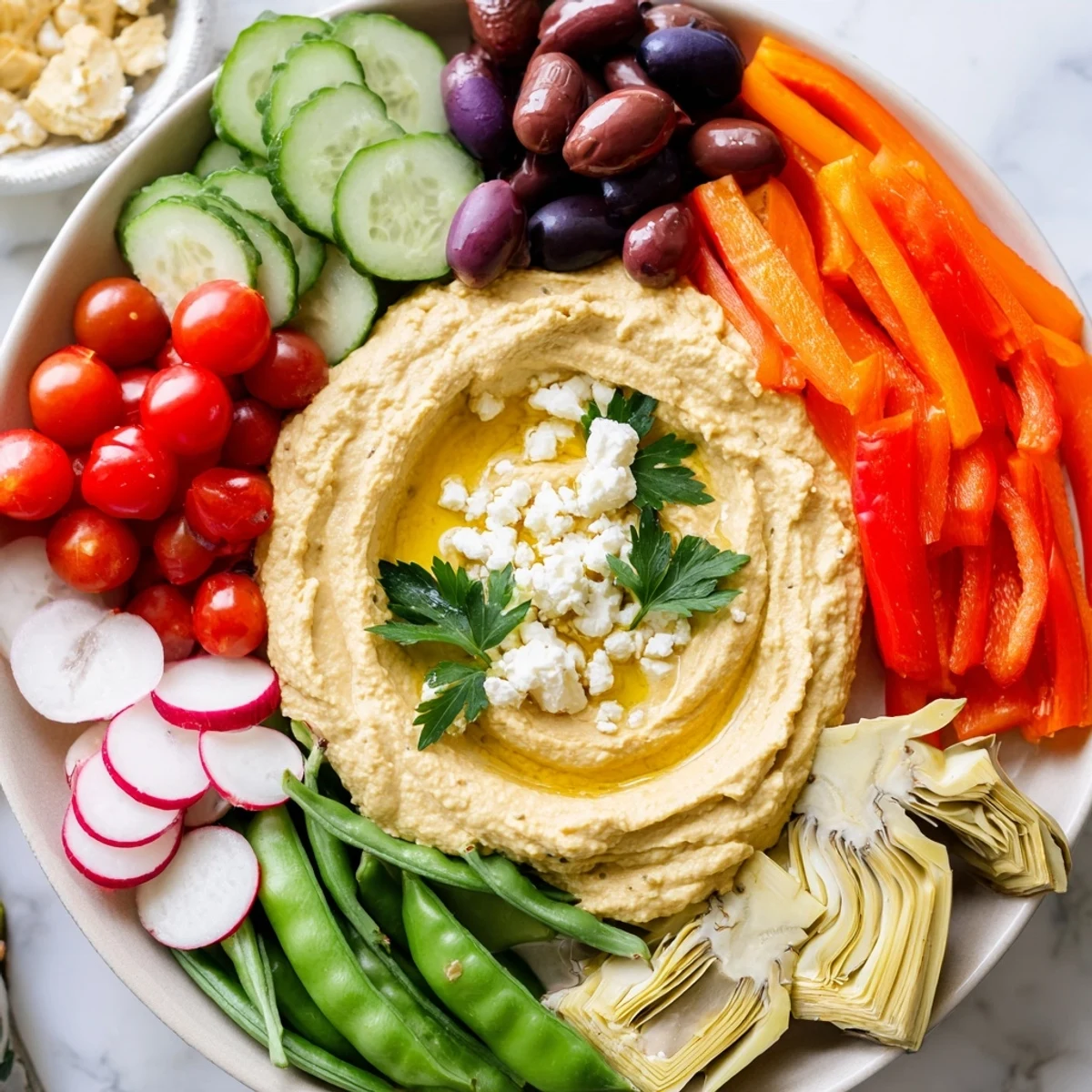
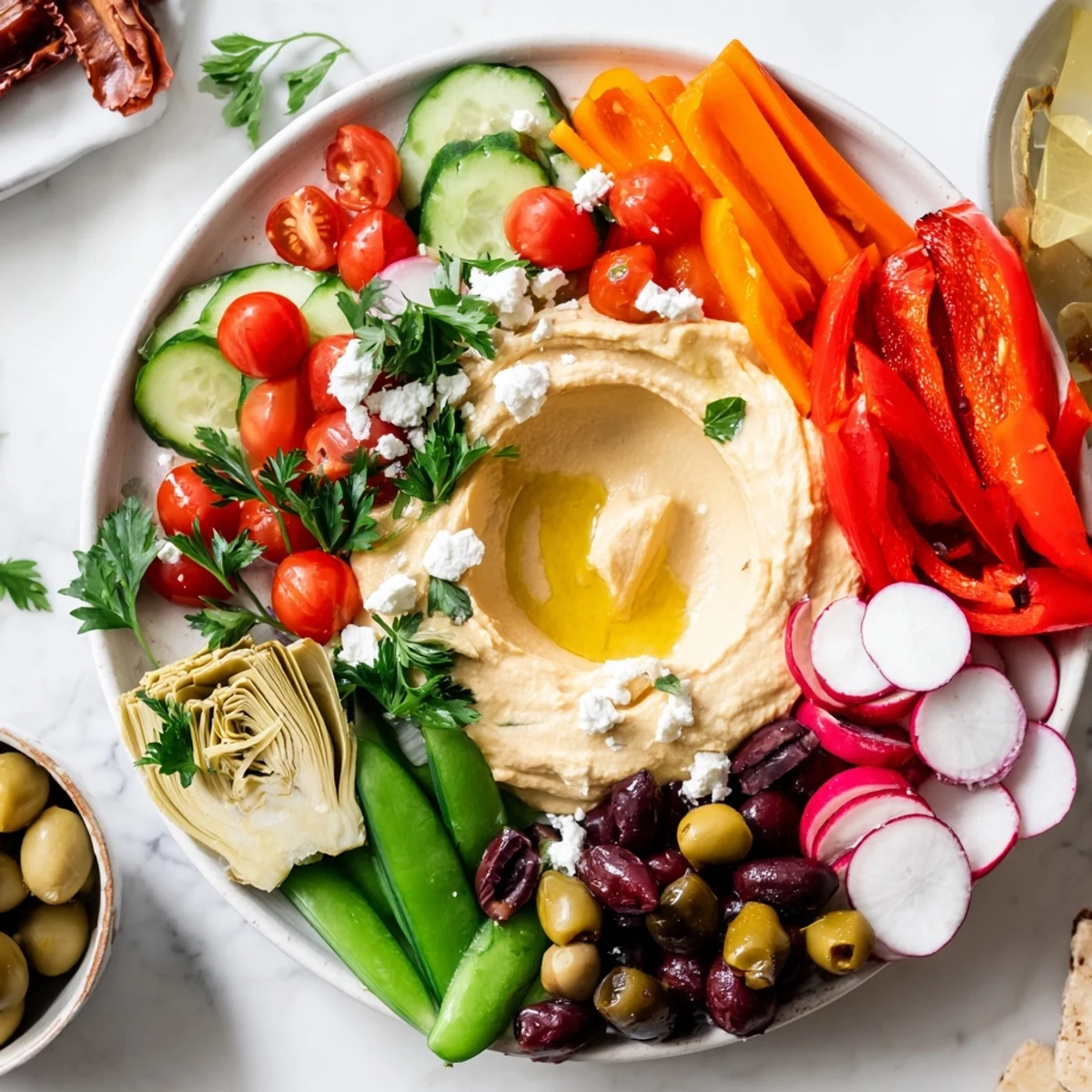
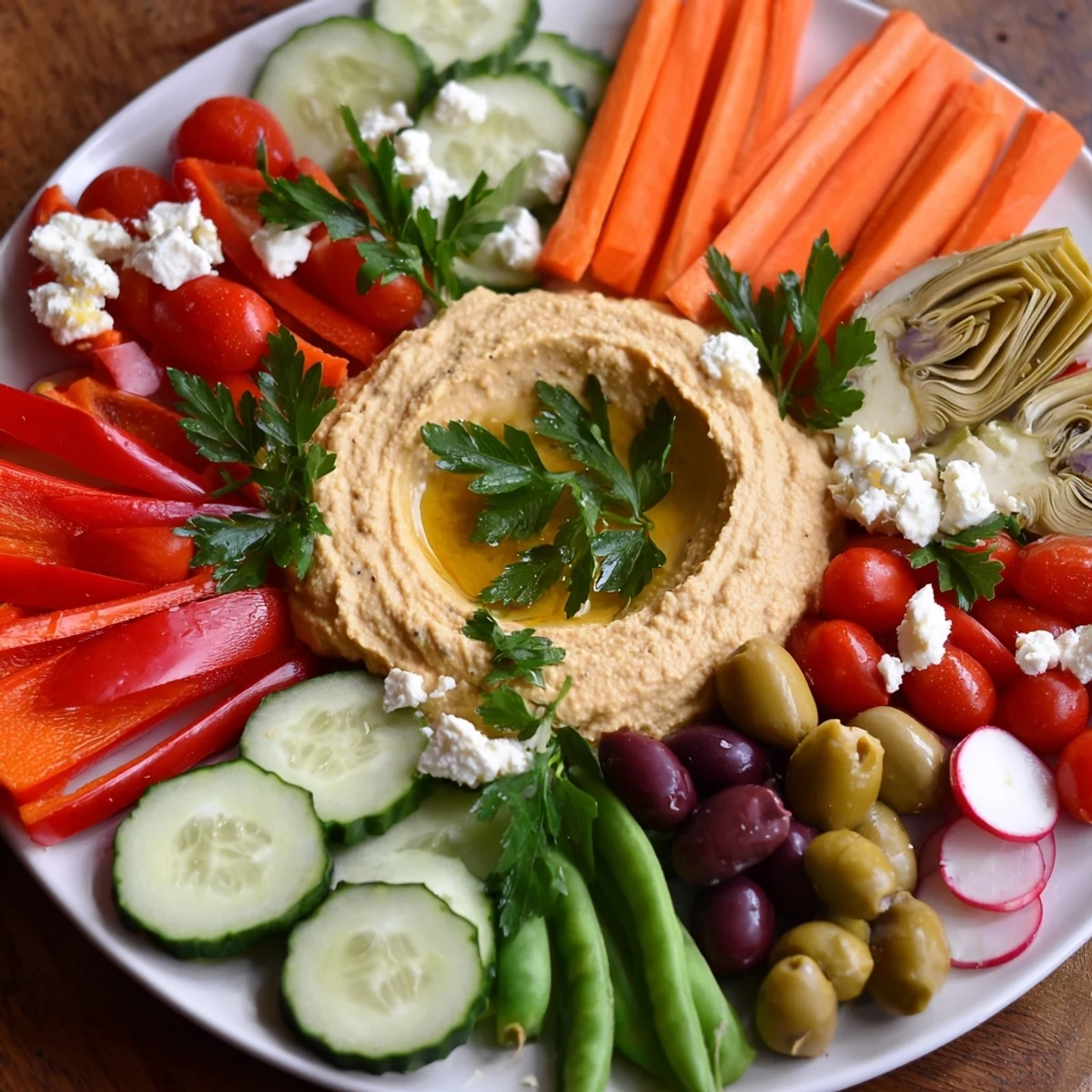
Save This vibrant Mediterranean platter features silky homemade hummus blended with chickpeas, tahini, and fresh lemon, swirled onto a large serving board and drizzled with olive oil. Arrange colorful fresh vegetables including cherry tomatoes, cucumber, bell peppers, and radishes around the hummus, then add kalamata olives, marinated artichoke hearts, roasted red peppers, and optional feta cheese. Garnish with fresh parsley and smoked paprika, then serve with warm pita bread or gluten-free crackers. Ready in just 20 minutes with zero cooking required, this easy, vegan-friendly platter serves six and makes an impressive centerpiece for any gathering.
The sound of unexpected guests arriving has always been my kitchen's call to action. One summer afternoon, as friends spontaneously gathered in our backyard, I threw together my first Mediterranean hummus platter using whatever vegetables were in my fridge. The colorful spread became an instant hit, with everyone crowding around the table, reaching for more.
Last month during my sister's surprise birthday gathering, I watched her face light up when I unveiled this vibrant platter. As conversation flowed, I noticed how naturally people gravitated toward the colorful display, picking up vegetables and dipping them into the creamy hummus between stories and laughter.
Ingredients
- Chickpeas: I prefer canned chickpeas for convenience, but Ive found removing their thin outer skins results in significantly smoother hummus.
- Tahini: Good quality tahini shouldnt be bitter or separated—stir it well before measuring for the creamiest results.
- Cold water: This seemingly simple ingredient is actually my secret weapon for achieving that perfectly whipped, light texture in homemade hummus.
- Colorful vegetables: The combination of red peppers, purple radishes, and bright green snap peas creates an edible rainbow that makes the whole platter irresistible.
Instructions
- Create the perfect hummus base:
- Combine chickpeas, tahini, olive oil, lemon juice, garlic, cumin, and salt in your food processor. Add cold water tablespoon by tablespoon until the mixture transforms into a silky, cloud-like consistency.
- Build your platter canvas:
- Swirl the hummus onto your serving plate using the back of a spoon to create valleys that will hold pools of olive oil. This simple technique elevates the presentation from homemade to restaurant-worthy.
- Arrange your colorful companions:
- Position vegetables, olives, artichoke hearts, roasted peppers, and feta around the hummus in clusters of color. I like to alternate colors and textures for a platter that looks as gorgeous as it tastes.
- Add the finishing touches:
- Sprinkle with smoked paprika and fresh parsley for pops of color and flavor. The bright green herbs against the red paprika creates a beautiful contrast that draws everyone in.
 Save
Save One rainy afternoon, I prepared this platter for just myself while working from home. What started as a quick lunch became a moment of mindful eating as I savored each different flavor combination. Sometimes the simplest foods become small celebrations when we give them our full attention.
Seasonal Adaptations
My platter transforms with the seasons, showcasing whatever produce shines brightest at the farmers market. Spring brings tender asparagus and watermelon radishes, summer offers sweet cherry tomatoes and crisp cucumbers, fall introduces endive and fennel, while winter welcomes roasted root vegetables and preserved peppers.
Making It Ahead
The hummus actually improves after sitting in the refrigerator overnight as the flavors meld together. I often make a double batch on Sunday, storing half for quick lunches throughout the week and saving the rest for an easy appetizer base when friends drop by unexpectedly.
Serving Suggestions
While pita bread is traditional, I've discovered that this platter pairs beautifully with so many alternatives depending on guests preferences. Even the most carefully arranged platter deserves thoughtful presentation right until the end.
- Warm pita triangles are classic, but rice crackers offer a satisfying gluten-free alternative that still holds up to scooping.
- For low-carb guests, include endive leaves or romaine hearts as edible dippers that add a refreshing crunch.
- Consider adding small serving spoons near the olives and artichokes so guests can easily transfer them to their plates.
 Save
Save This Mediterranean hummus platter isnt just food—its an invitation to gather, share, and connect. Each vibrant component tells a story of sun-drenched shores and ancient traditions brought right to your table.
Recipe Questions & Answers
- → Can I make the hummus ahead of time?
-
Yes, absolutely. Prepare the hummus up to 2 days in advance and store it in an airtight container in the refrigerator. Assemble the platter no more than 2 hours before serving to keep vegetables crisp. If prepping vegetables earlier, store them separately in sealed containers with damp paper towels to maintain freshness.
- → What vegetables work best for this platter?
-
Cherry tomatoes, cucumbers, bell peppers, carrots, radishes, and sugar snap peas are excellent choices. Feel free to substitute with seasonal options like zucchini, celery, endive, or broccoli florets. Choose vegetables that offer variety in color, texture, and flavor for visual appeal and interesting eating experience.
- → How do I achieve perfectly smooth hummus?
-
Blend chickpeas, tahini, olive oil, lemon juice, garlic, and spices for 2-3 minutes until completely smooth. Add cold water gradually, one tablespoon at a time, while processing until you reach desired consistency. Taste as you go and adjust lemon juice, salt, and cumin to balance flavors perfectly.
- → Is this platter suitable for dietary restrictions?
-
Absolutely. The base hummus and vegetables are naturally vegan and gluten-free. Simply omit the feta cheese for a fully vegan option and serve with gluten-free crackers instead of pita bread. Always verify that all store-bought items like olives and artichoke hearts are certified gluten-free if needed.
- → What can I add to enhance the hummus flavor?
-
Top the hummus with toasted pine nuts for crunch, a drizzle of chili oil for heat, or a sprinkle of sumac for tanginess. Roasted garlic cloves, pomegranate seeds, or additional herbs like mint or oregano add wonderful depth. Experiment with flavored olive oils infused with garlic or herbs for sophisticated variations.
- → How many servings does this platter provide?
-
This platter comfortably serves 6 people as an appetizer or light lunch. Portion sizes depend on whether it's a standalone course or part of a larger spread. For heartier appetites or smaller gatherings, adjust ingredient quantities accordingly while maintaining the platter's balanced presentation.