
 Save
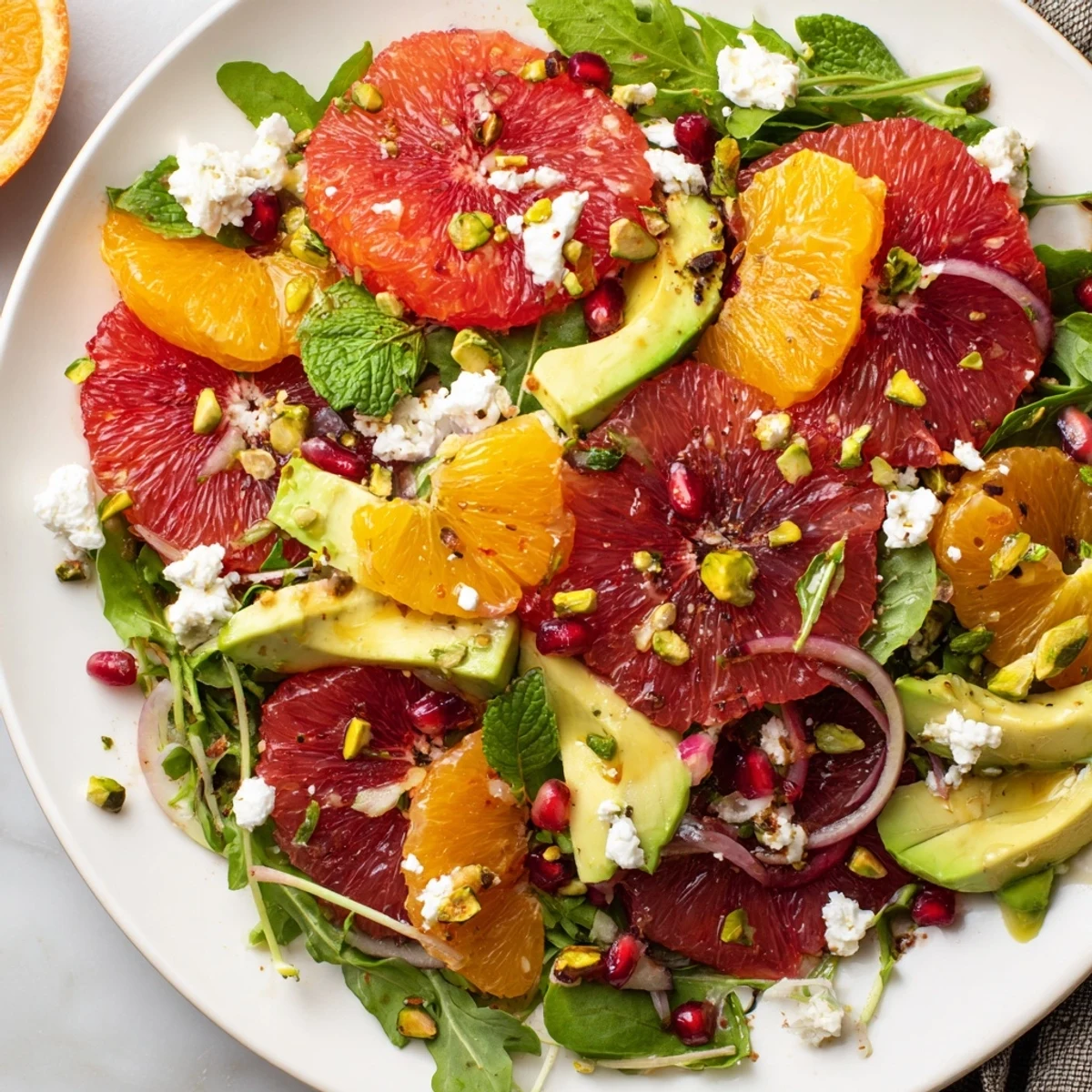
Save This Mediterranean-inspired citrus salad brings together juicy orange and grapefruit segments with jewel-like pomegranate seeds for a stunning presentation.
Creamy avocado slices and crumbled feta add richness and a savory contrast to the sweet-tart fruits, while a simple honey-lemon dressing ties everything together.
Ready in just 20 minutes with no cooking required, it's an effortless starter or light meal that's naturally vegetarian and gluten-free.
The winter farmers market had a tower of blood oranges stacked like little jewels, and before I knew it I had bought a bag with no plan whatsoever. That impulse purchase turned into one of the best salads I have ever thrown together on a lazy Sunday afternoon. The pomegranate was a last minute grab from the produce aisle, sitting next to the register like it was waiting for me. Twenty minutes later, my kitchen counter looked like a painting.
I served this at a small gathering when a friend brought over a bottle of crisp white wine and we stood in the kitchen eating straight from the platter instead of using plates. Nobody talked for a solid two minutes, which is the highest compliment any salad can receive. My friend Sarah called it the kind of salad that makes you forget it is good for you.
Ingredients
- 2 large oranges: Use navel or cara cara for their sweetness, and pick ones that feel heavy for their size since that means more juice.
- 2 large grapefruits: Ruby red adds beautiful color and a pleasant bitterness that balances the sweeter elements.
- 1 blood orange (optional): The deep crimson flesh turns this from a regular salad into something people photograph before eating.
- 1 ripe avocado: Choose one that yields slightly when pressed but is not mushy, as firm slices hold their shape on the platter.
- 1 small red onion: Soak the slices in ice water for five minutes if you find raw onion too sharp.
- ½ cup pomegranate seeds: Fresh seeds are worth the effort, but store bought work in a pinch.
- ½ cup feta cheese, crumbled: A good quality block of feta crumbled by hand gives you those satisfying irregular chunks.
- 4 cups mixed greens: Arugula adds a peppery bite that plays beautifully with the sweet citrus.
- 3 tbsp extra virgin olive oil: This is the backbone of the dressing, so use the good stuff.
- 1 tbsp fresh lemon juice: Fresh squeezed only, as the bottled version tastes flat and throws off the whole balance.
- 1 tsp honey or maple syrup: Just enough sweetness to round the sharp edges of the mustard and citrus.
- ½ tsp Dijon mustard: Acts as the emulsifier that keeps your dressing from separating.
- Sea salt and freshly ground black pepper: Season in tiny increments, tasting as you go.
- 2 tbsp fresh mint leaves, torn: Tearing rather than chopping keeps the mint from bruising and turning dark.
- 1 tbsp toasted pistachios or walnuts, chopped: Toasting takes thirty seconds in a dry pan and doubles the flavor.
Instructions
- Prepare the citrus:
- Using a sharp knife, slice off the top and bottom of each fruit so it sits flat, then cut away the peel and white pith in smooth downward strokes. Cut the fruit into rounds or segments, letting any extra juice pool in a bowl to use later in the dressing.
- Slice the avocado:
- Cut the avocado in half, remove the pit, and peel the skin back gently before slicing it into thin, even pieces. Lay the slices on a plate and give them a tiny squeeze of lemon juice to prevent browning.
- Cut the onion:
- Slice the red onion as thinly as you can manage, aiming for almost translucent rings that will melt into the salad rather than dominate it. If the bite feels too aggressive, let the slices sit in cold water while you prep the rest.
- Whisk the dressing:
- In a small bowl, combine the olive oil, lemon juice, honey, Dijon mustard, salt, and pepper, whisking until the mixture looks creamy and unified. Taste it on a leaf of greens and adjust the seasoning before moving on.
- Build the platter:
- Spread the mixed greens across a large serving platter as your base, then arrange the citrus slices, avocado, and red onion in scattered, overlapping layers. Let it look abundant and slightly wild rather than rigidly organized.
- Add the jewels:
- Scatter the pomegranate seeds and crumbled feta over everything with generous hands, letting some fall into the nooks and some rest on top. The contrast of ruby seeds against white feta against golden citrus is the whole visual magic.
- Finish and dress:
- Drizzle the dressing in a gentle back and forth motion across the platter rather than dumping it in one spot. Scatter the torn mint and toasted nuts if using, then serve immediately while everything looks vibrant and fresh.
 Save
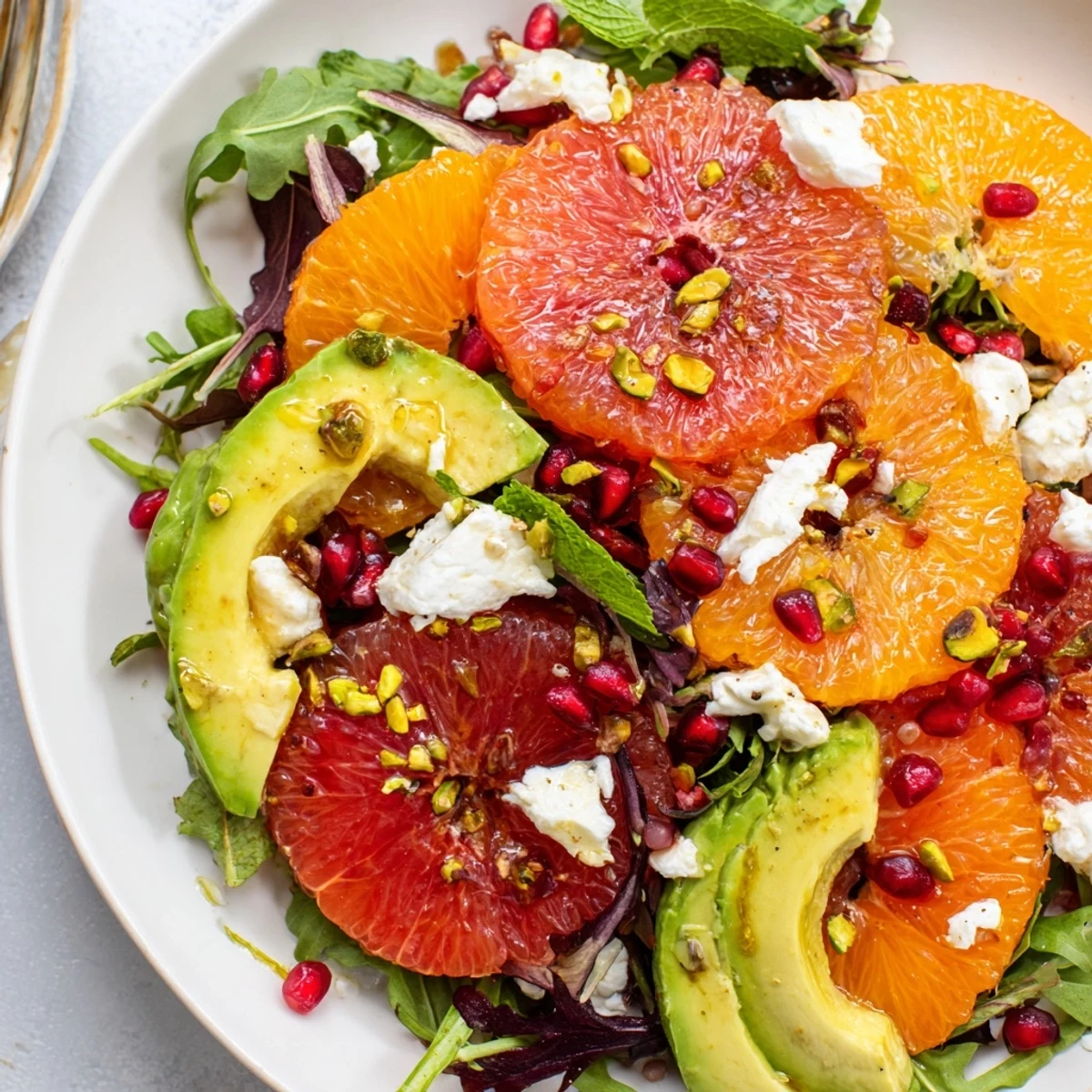
Save There is something about a salad this colorful that makes the whole table feel like a celebration, even on a random Tuesday.
When Citrus Season Hits Its Peak
From December through March, citrus fruit reaches its absolute best, and this salad is the perfect excuse to load up on every variety you can find. Swap in pomelos, tangerines, or Meyer lemons depending on what looks good. Each variation shifts the flavor slightly, and none of them are wrong.
Making It a Complete Meal
This salad stands beautifully on its own but transforms into something heartier with minimal effort. Grilled shrimp or sliced rotisserie chicken laid on top turns it into a satisfying lunch. A hunk of crusty bread on the side is really all you need to mop up the dressing and leftover juices.
The Art of Plating Without Stress
Forget symmetry and just let the ingredients fall where they want, because the best looking plates of food have a sense of looseness to them. Use the largest platter you own, since crowding makes everything look smaller and less appealing. Trust your eye and step back before serving to see where the gaps are.
- Avoid stacking the citrus directly on top of each other or the bottom layer gets soggy.
- Keep the dressing on the side if you know the salad will sit out for more than twenty minutes.
- Always serve this at room temperature, because cold citrus loses half its flavor.
 Save
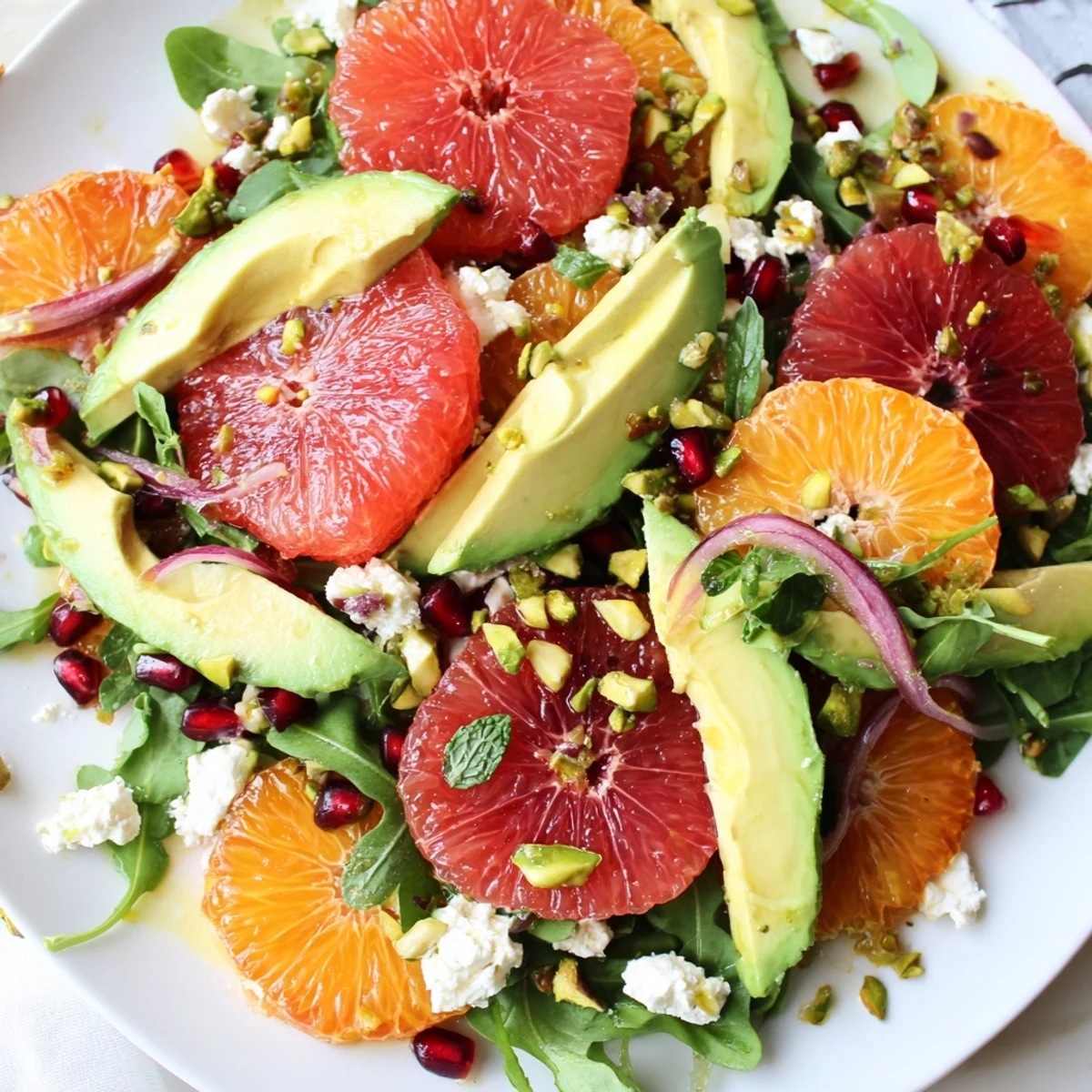
Save Some recipes become part of your regular rotation because they are easy, and others earn their spot because they make people happy every single time you set them on the table. This one does both without even trying.
Recipe Questions & Answers
- → Can I prepare this citrus salad ahead of time?
-
You can prep the dressing and slice the onion up to a day in advance. However, assemble the full salad just before serving to keep the avocado from browning and the greens crisp.
- → What citrus fruits work best for this salad?
-
Navel oranges, grapefruits, and blood oranges are ideal. You can also include tangerines or pomelo segments for variety. Choose fruits that feel heavy for their size, indicating juiciness.
- → How do I easily remove pomegranate seeds?
-
Cut the pomegranate in half, hold it cut-side down over a bowl, and tap the outer shell firmly with a wooden spoon. The seeds will fall out easily. Alternatively, separate them gently under water to minimize mess.
- → What can I substitute for feta cheese?
-
Goat cheese crumbles work beautifully as a substitute. For a dairy-free version, try vegan feta or simply omit the cheese and add a sprinkle of toasted pine nuts for texture and flavor.
- → What main dishes pair well with this salad?
-
Grilled lemon herb chicken, pan-seared salmon, or shrimp skewers complement the citrus flavors perfectly. It also works alongside quinoa or couscous for a complete vegetarian meal.
- → How should I store leftover dressed salad?
-
Once dressed, the salad is best eaten immediately. If you must store it, keep it in an airtight container in the refrigerator for up to one day, though the greens will soften and the avocado may discolor.