
 Save
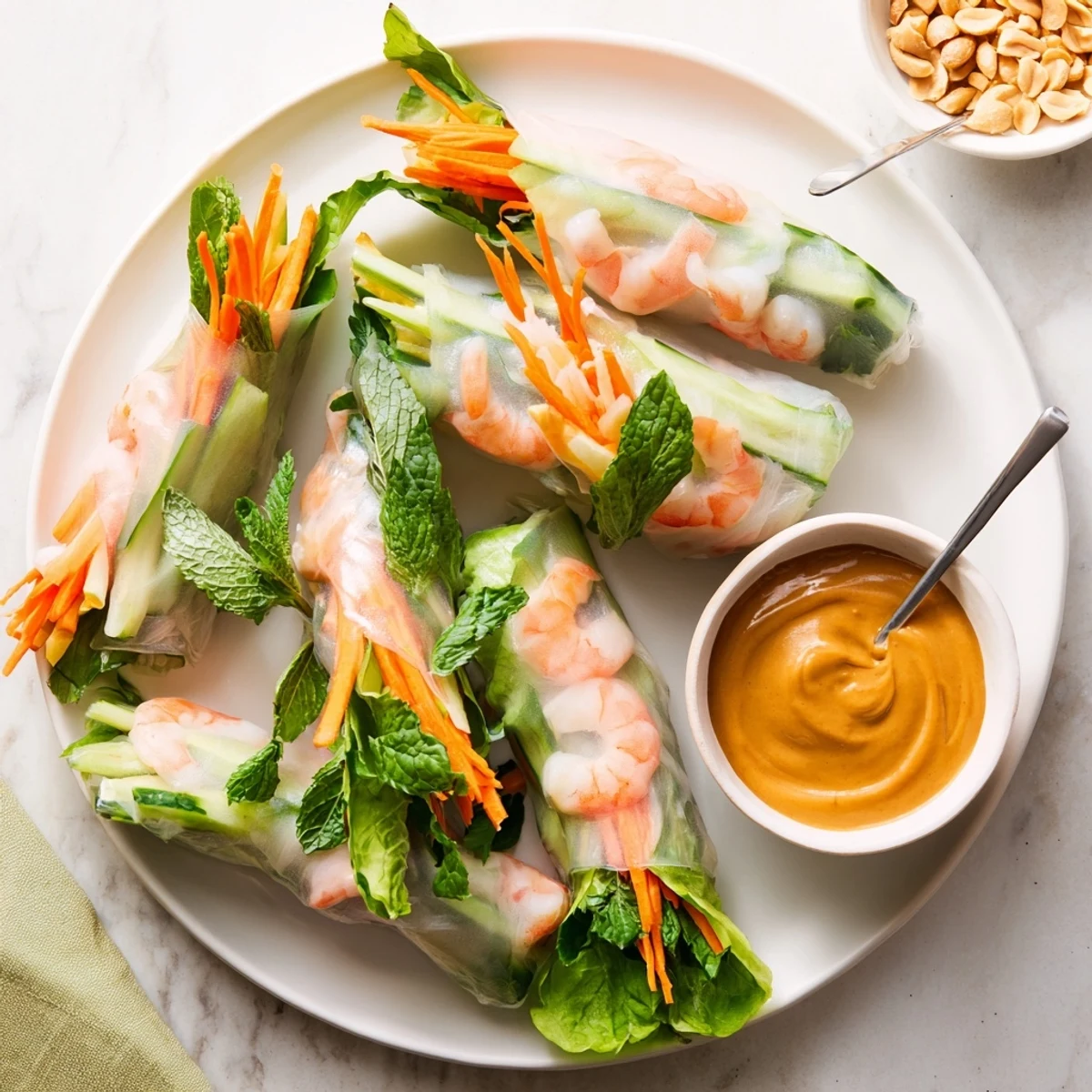
Save These delicate rice paper wrappers encase a colorful medley of julienned vegetables, tender cooked shrimp, and fragrant fresh herbs like mint, cilantro, and Thai basil. The crisp, refreshing texture pairs beautifully with a rich, creamy peanut sauce seasoned with soy sauce, hoisin, and a touch of sriracha for gentle heat. Ready in just 30 minutes with no cooking required, these Vietnamese-inspired rolls make an ideal light appetizer, snack, or fresh summer meal that's as beautiful to look at as it is delicious to eat.
The first time I attempted fresh spring rolls, my kitchen counter looked like a disaster zone of torn rice paper and scattered herbs. My Vietnamese neighbor caught me struggling through my third attempt and gently showed me that the water temperature matters more than I thought—warm but never hot, just barely enough to make the wrappers pliable. Now these rolls are my go-to summer dinner when the thought of turning on the oven feels unbearable.
Last summer I made these for a backyard dinner party and watched my typically vegetable-averse uncle reach for his third roll. The combination of cool crisp vegetables against that rich savory sauce creates this perfect balance that keeps everyone coming back for more. Something magical happens when fresh mint hits that peanut butter mixture.
Ingredients
- Rice paper wrappers: These delicate rounds transform from stiff discs into pliable sheets—store them flat and handle gently once softened
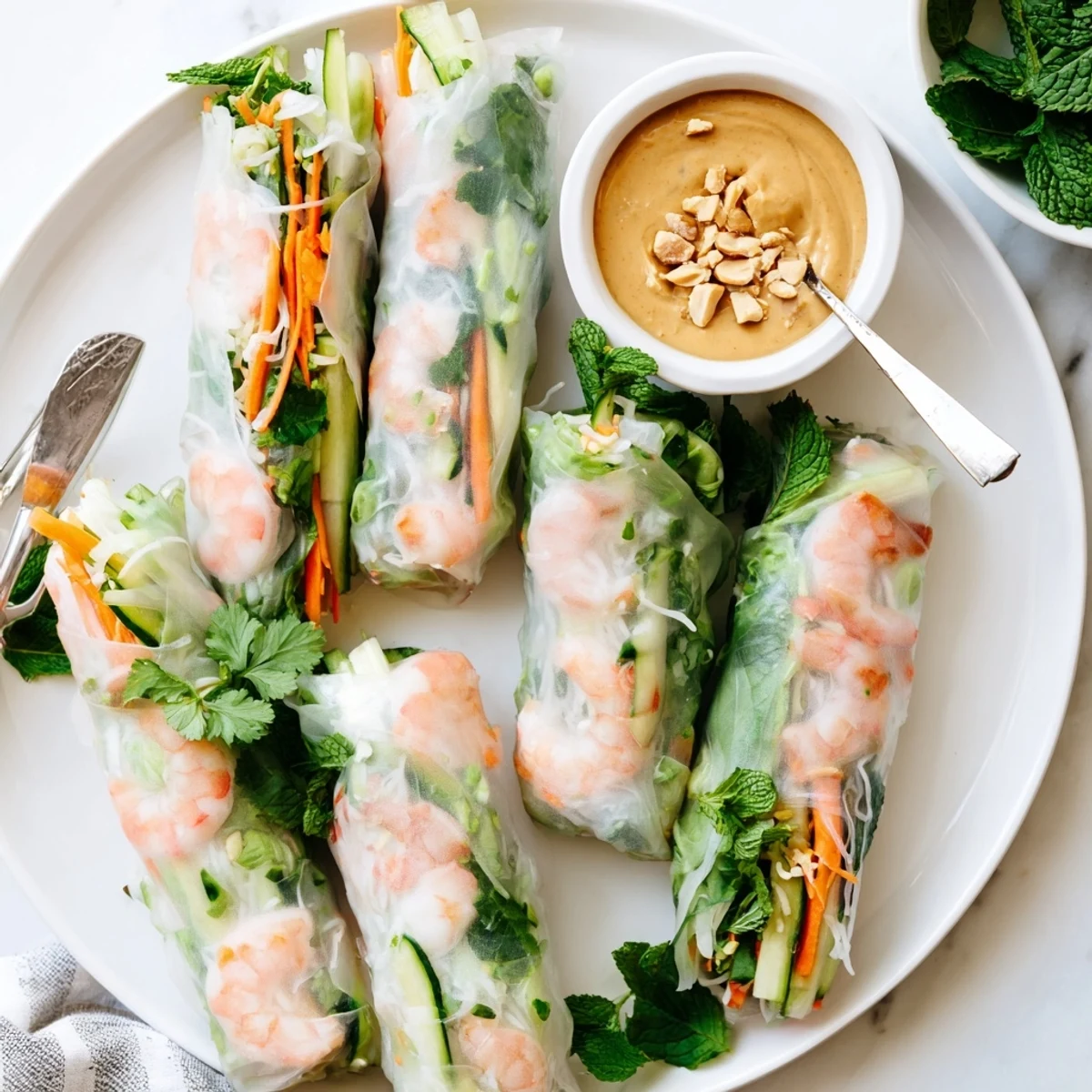
- Cooked shrimp: Halved lengthwise they create that beautiful pink show through the translucent rice paper—poach them yourself or buy high-quality precooked
- Rice vermicelli noodles: Cook these just until tender then rinse immediately with cold water to stop the cooking and prevent clumping
- Carrot and cucumber: Julienne these into thin matchsticks so they roll neatly without creating awkward bulges in your finished rolls
- Fresh herbs: The combination of mint cilantro and Thai basil is non-negotiable—these three create that signature bright aromatic flavor
- Creamy peanut butter: Use the regular smooth kind not natural separated peanut butter for the silkiest sauce texture
- Hoisin sauce: This adds that deep sweet umami flavor that makes the dipping sauce absolutely irresistible
Instructions
- Prep your filling station:
- Cook rice vermicelli according to package directions then rinse under cold water until completely cool. Julienne your carrot and cucumber into thin matchsticks. Wash and thoroughly dry all herbs and lettuce. Arrange everything in separate bowls so you can grab and roll assembly-line style.
- Soften the rice paper:
- Fill a large shallow dish with warm water. Dip one rice paper wrapper for just 5 to 8 seconds—any longer and it becomes impossibly fragile to work with. Lay it flat on a clean damp kitchen towel.
- Layer your fillings:
- Place two shrimp halves cut side up about 2 inches from the bottom edge. Add a small handful of noodles then carrot cucumber lettuce and a generous mix of all three fresh herbs. Do not overfill or rolling becomes a struggle.
- Roll it tight:
- Fold the bottom edge over the fillings then fold in both sides like a burrito. Roll forward tightly keeping the filling snug inside. The rice paper will stick to itself creating a neat sealed cylinder.
- Whisk the sauce:
- In a small bowl combine peanut butter soy sauce hoisin sriracha vinegar and honey. Whisk until smooth then gradually add warm water until it reaches a dippable consistency—thick enough to coat but thin enough to dip.
- Serve and enjoy:
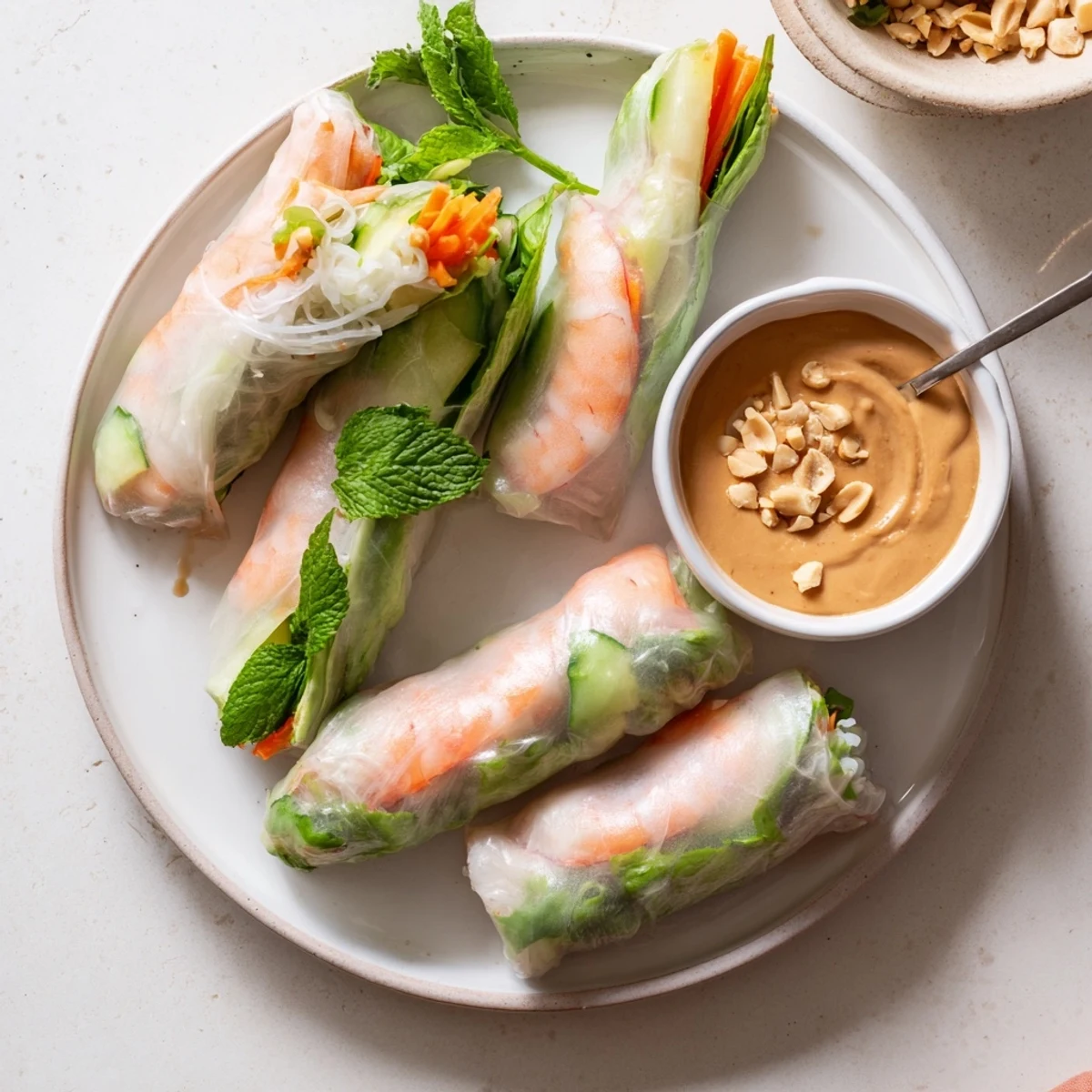
- Arrange rolls on a platter with the peanut sauce alongside. These are best eaten immediately while the rice paper is at its most tender and the vegetables still snap with every bite.
 Save
Save My daughter now requests these for her birthday dinner every year which feels like a small victory for a parent who once hid vegetables in everything. Watching her little hands carefully tuck herbs inside the wrapper has become one of my favorite kitchen memories.
Making Ahead
I have learned that you can prep all the vegetables and herbs up to a day ahead storing them separately in the refrigerator. The peanut sauce actually benefits from sitting overnight as the flavors meld and deepen. Just do not roll the spring rolls more than four hours before serving or the rice paper toughens.
Perfecting Your Roll
The first few rolls might look messy and that is completely normal. Do not let the rice paper dry out while you work—cover finished rolls with a damp cloth. If a wrapper tears just press another small piece over the spot or accept that your first roll becomes the chef is snack.
Customizing Your Fillings
Once you master the basic technique the variations become endless. I have added sliced avocado for creaminess swapped in cooked chicken or tofu and even added thin strips of red pepper for extra crunch. The key is keeping all pieces roughly the same size so no single ingredient overwhelms each bite.
- Try adding sliced mango or papaya for a sweet tropical twist
- Leftover grilled pork or chicken makes an excellent protein substitution
- Sprinkle crushed peanuts inside the roll for extra texture in every bite
 Save
Save There is something profoundly satisfying about food you eat with your hands and these rolls never fail to make dinner feel like a small celebration.
Recipe Questions & Answers
- → Can I make these spring rolls ahead of time?
-
Spring rolls are best enjoyed immediately after assembly while the rice paper remains soft and pliable. However, you can prepare all the fillings in advance and store them separately in the refrigerator. When ready to serve, simply assemble the rolls. If you must refrigerate assembled rolls, cover them tightly with a damp paper towel and plastic wrap, but consume within 4 hours for optimal texture.
- → What can I substitute for shrimp?
-
Firm tofu, pressed and sliced into strips, makes an excellent vegetarian alternative. For a protein-free version, simply increase the amount of vegetables and noodles. Grilled chicken strips or cooked crab also work beautifully. The key is using ingredients that hold their texture well inside the delicate wrapper.
- → How do I prevent rice paper from tearing?
-
Don't oversoak the wrappers—a quick 5-8 second dip in warm water is all they need. They should feel pliable but still slightly firm to the touch, continuing to soften as you work. Rolling on a clean, damp kitchen towel helps prevent sticking. Arrange fillings in a line rather than a pile, and roll firmly but gently without pulling too tightly on the paper.
- → Can I make the peanut sauce spicy?
-
Absolutely. Adjust the sriracha to your preferred heat level, starting with 1 teaspoon and adding more gradually. For deeper complexity, add a dash of sesame oil, minced fresh garlic, or a pinch of crushed red pepper flakes. You can also substitute chili garlic sauce or sambal oelek for sriracha to vary the heat profile.
- → Are these spring rolls gluten-free?
-
Traditional spring rolls are naturally gluten-free, but you need to check your condiments. Replace regular soy sauce with tamari and ensure your hoisin sauce is certified gluten-free. Most rice paper wrappers are gluten-free, but always verify the label. The peanut sauce can easily be made gluten-free with these simple substitutions.
- → What other vegetables work well in spring rolls?
-
Bell peppers, shredded cabbage, bean sprouts, and sliced avocado all add wonderful texture and flavor. For extra crunch, try julienned jicama or daikon radish. Fresh herbs beyond the basics can include Thai basil, perilla leaves, or even fresh shiso leaves. Feel free to customize based on what's fresh and available.