
 Save
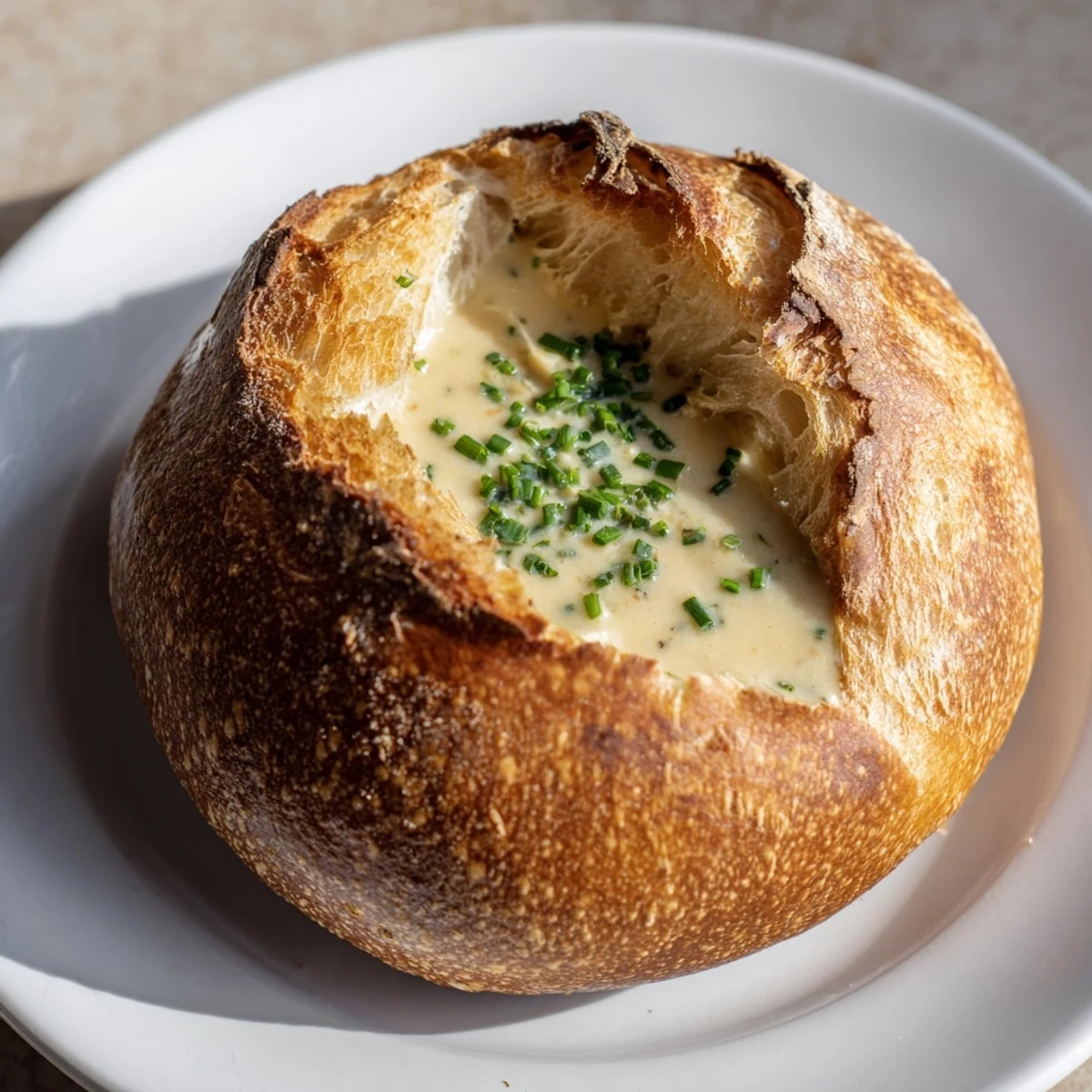
Save This rustic sourdough loaf features a crusty, golden exterior and a chewy, tangy interior. Combining a slow rise with stretch-and-fold techniques, the dough develops complex flavor and structure. After baking to a deep golden brown, the top is sliced off and the center hollowed to form an edible bowl, ideal for hearty soups, stews, or creamy dips. The loaf benefits from an overnight cold ferment for extra tang, and whole wheat flour can be added for nuttiness. Perfect for pairing with savory fillings or using hollowed bread as croutons.
Discovering how to make a rustic sourdough bread bowl was a revelation in my kitchen—there is something so satisfying about crafting a crusty, tangy loaf that becomes the perfect edible vessel for soups and stews.
I remember the first time I nailed this bread bowl—unexpected guests arrived and the warm, crusty bread filled with soup turned what could have been a simple meal into a cozy celebration.
Ingredients
- Bread flour: I reach for high-protein bread flour because it gives the bread that perfect chewy texture that holds up to soup without getting soggy
- Active sourdough starter: Using a bubbly and active starter is key to that tangy flavor and good rise—make sure it’s fed and lively
- Lukewarm water: It helps activate the yeast gently without killing it—think warm bath, not hot tub
- Fine sea salt: Provides seasoning without harshness and helps develop gluten for structure
- Extra flour: For dusting—the secret to handling sticky dough without deflating it
Instructions
- Get Everything Ready:
- Start by mixing the flour and lukewarm water just enough to bring them together; cover and rest so the flour absorbs the water—this is like the dough's quiet time to relax before the real work begins.
- Bring the Dough to Life:
- Add your active sourdough starter and salt, mixing until you get a shaggy mass that will soon transform into a stretchy, elastic dough.
- The Part Where Magic Happens:
- Turn the dough onto a floured surface and knead or perform the stretch-and-fold technique for 5 to 8 minutes until pleasantly smooth and elastic; listen to the soft tearing sounds and feel the dough come alive under your hands.
- Let It Rise and Shine:
- Pop the dough into a lightly oiled bowl, cover it and let it rise at room temperature for 4 to 6 hours, folding gently every 30 minutes for the first 2 hours to build structure and strength.
- Shape With Purpose:
- After the fermentation, divide the dough into two equal pieces and shape each into a tight round ball to create a uniform crust and an even crumb.
- Proof Like a Pro:
- Place each ball seam-side up in a floured proofing basket or bowl; cover and refrigerate for 4 to 8 hours or let it puff up at room temperature for 1 to 2 hours before baking.
- Preheat Your Oven:
- Heat the oven to 230°C (450°F) with your Dutch oven or baking stone inside so it’s piping hot and ready to work its magic.
- Score and Bake:
- Gently tip your dough rounds onto parchment, score the tops to let steam escape, then carefully transfer to your preheated vessel; cover and bake for 20 minutes, then uncover and bake another 20 for a golden crust.
- Cooling Off:
- Let the bread cool completely on a wire rack to finish cooking and set the crumb before hollowing it out.
- Ready to Serve:
- Slice off the tops, hollow out the center leaving a 2 to 3 cm thick wall, and fill with your favorite soup, stew, or dip to wow everyone at your table.
 Save
Save This bread bowl became more than food when a chilly autumn evening turned into a warm memory, sharing bowls of soup straight from these crusty loaves with family gathered close.
Keeping It Fresh
Once cooled, store bread bowls in a loose paper bag to keep the crust crisp while preventing them from drying out inside—you want that crunch without cardboard dryness.
Serving Ideas That Clicked
From creamy chowders to spicy chili, this bread bowl makes every soup feel like a special occasion—try pairing with broccoli cheddar for a comforting classic or a robust lentil stew for something hearty and healthy.
A Time This Recipe Saved the Day
When last-minute guests showed up on a busy day, these bread bowls filled with homemade tomato basil soup turned stress into smiles with minimal fuss and maximum warmth.
- Remember to keep extra starter on hand to never miss a baking opportunity
- Use a serrated knife when hollowing to avoid tearing the crust
- Don't toss the bread you removed—cube and toast it for instant croutons
 Save
Save Thanks for spending this time in the kitchen with me—may your bread bowls always be crusty, your soups warm, and your memories even warmer.
Recipe Questions & Answers
- → What gives the bread its tangy flavor?
-
The tang comes from the active sourdough starter used during fermentation, which develops natural acidity over time.
- → How long should the dough rise before baking?
-
The dough undergoes a bulk fermentation of 4–6 hours with stretch-and-folds, then a final cold or room temperature rise before baking.
- → Why score the top before baking?
-
Scoring controls oven spring and helps create an attractive, rustic crust on the loaf.
- → Can other flours be used in this loaf?
-
Yes, substituting up to 20% whole wheat flour adds a nuttier flavor while maintaining the bread's structure.
- → How is the bread bowl formed after baking?
-
Once cooled, the top is sliced off and the interior crumb hollowed out, leaving a sturdy wall for filling.