
 Save
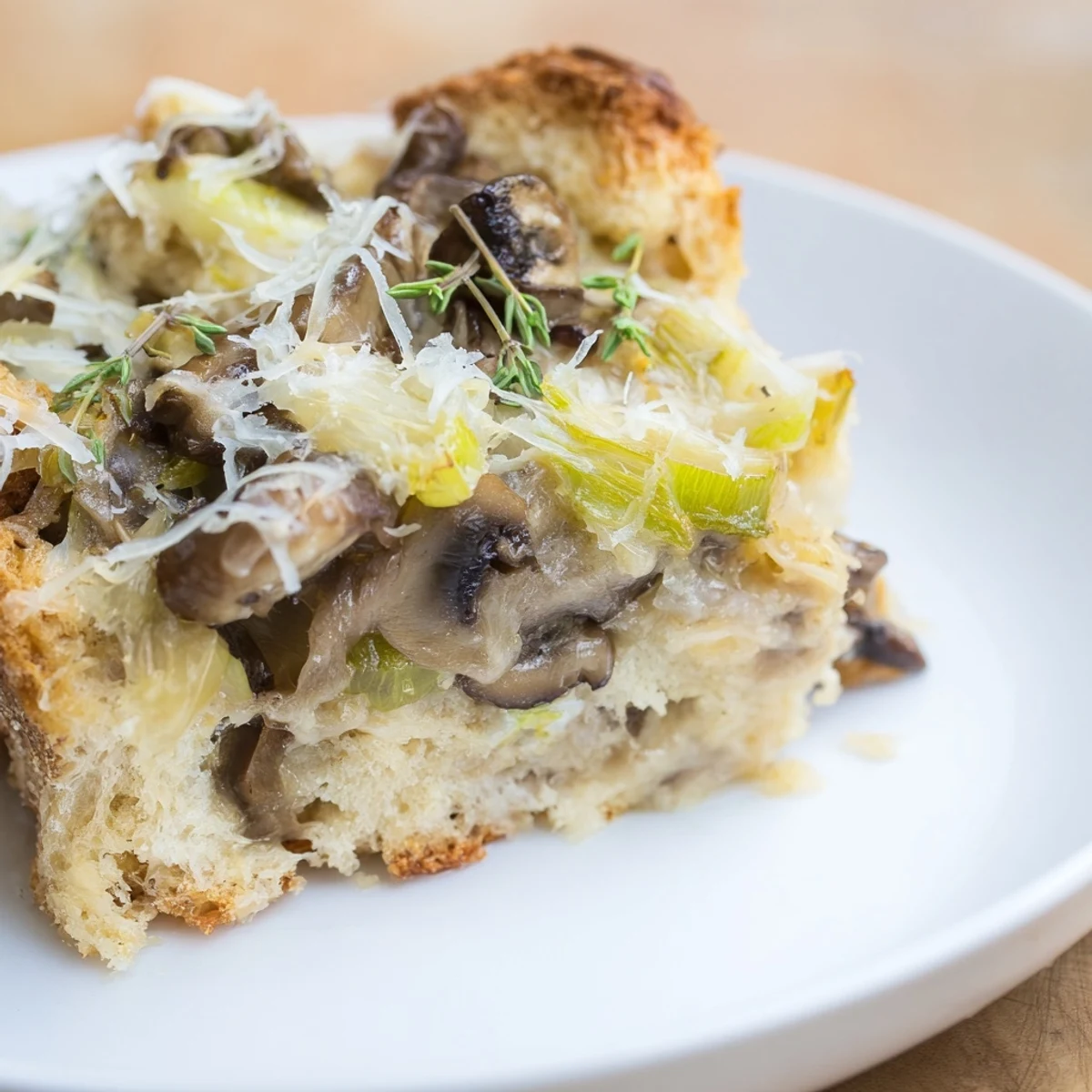
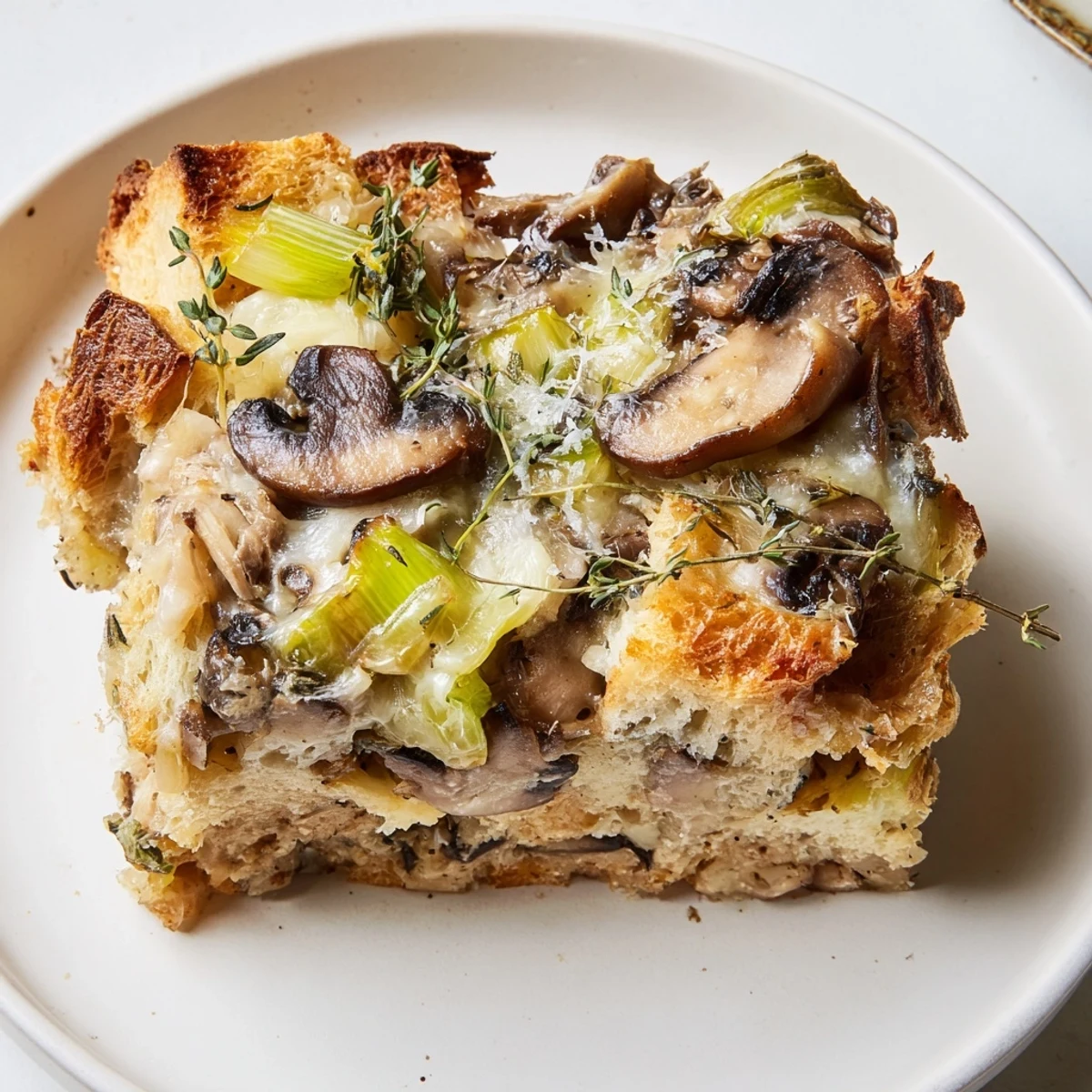
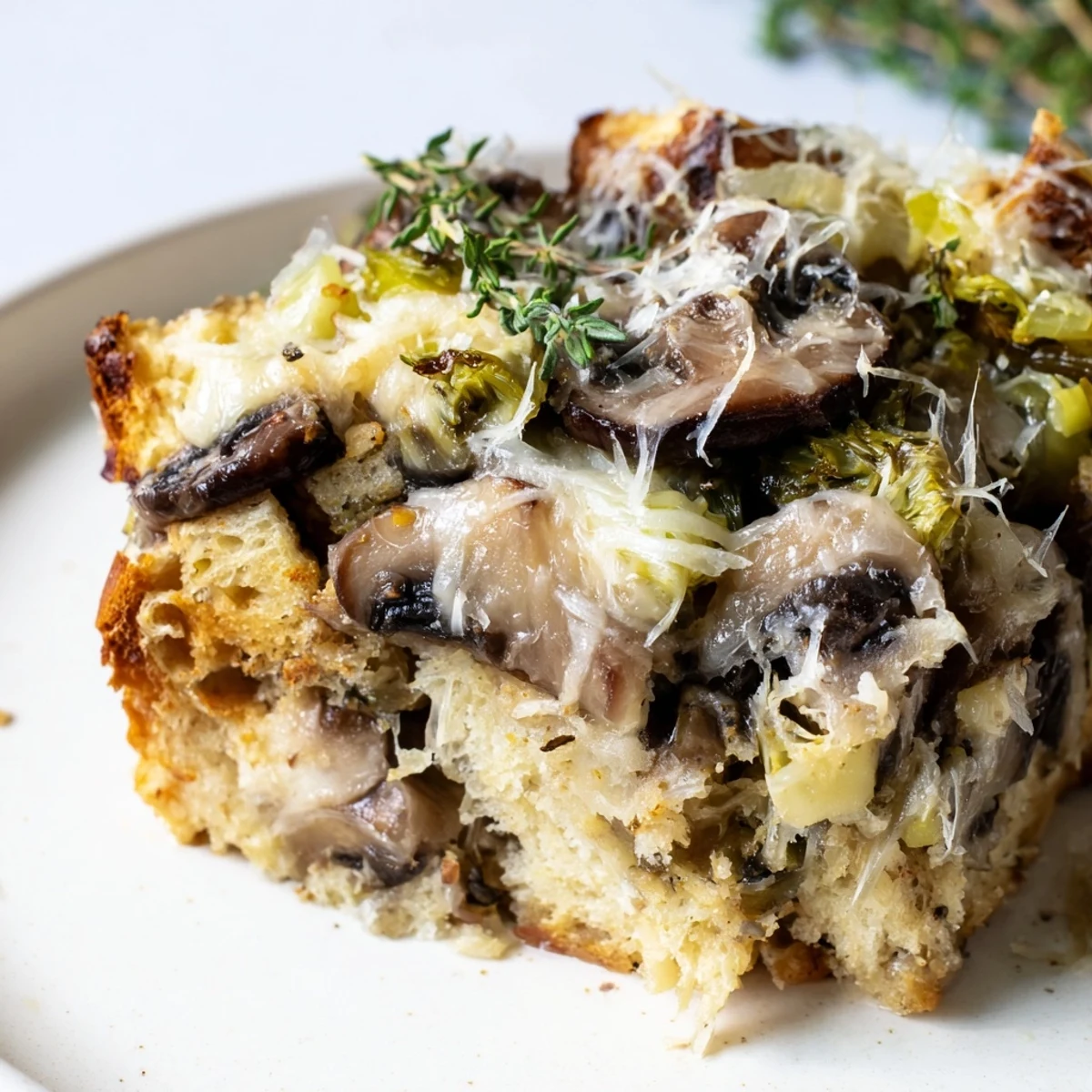
Save This comforting savory bread pudding features tender mushrooms and sweet leeks sautéed in olive oil and seasoned with thyme, salt, pepper, and nutmeg. Cubed day-old rustic bread is soaked in a rich custard of eggs, milk, cream, Gruyère, and Parmesan cheeses, then combined with the vegetables. The mixture is baked until golden and set, delivering a warm, hearty dish perfect as a main or side. Variations include adding fresh herbs or substituting cheeses for enhanced flavor.
There's something about a rainy Sunday when you have good bread getting stale on the counter that makes you rethink what dinner could be. I was standing in my kitchen, staring at a loaf that wasn't quite past its prime, when I pulled out a container of mushrooms I'd picked up at the farmers market and some leeks that had been waiting for the right moment. What started as an attempt not to waste anything turned into this savory bread pudding—and suddenly it wasn't just about rescue cooking anymore, it was about the way earth and cream and butter and bread could transform into something entirely different from where they started.
I made this for a dinner party once, and I remember being nervous about timing—would it cook through evenly, would the top brown the way I wanted it to—but then I walked away to pour wine and talk with friends, and when I came back to check on it, the whole kitchen smelled like butter and thyme and toasted bread, and somehow that smell settled everything. People came back for seconds, and one friend asked me quietly in the kitchen what made it taste so rich, and I realized I couldn't explain it exactly—it was just the way everything worked together.
Ingredients
- Olive oil: Two tablespoons is your starting point for coaxing out the mushroom flavors without overwhelming them.
- Mixed mushrooms: Use whatever looks good at your market—cremini, shiitake, oyster—they all bring something different, and a pound sliced isn't nearly as much as it sounds because they shrink down beautifully as they cook.
- Leeks: Just the white and light green parts, cleaned between the layers where grit hides, then sliced thin enough that they become tender rather than stringy.
- Garlic cloves: Two cloves minced, added at the very end of the vegetable cooking so they stay bright and don't turn bitter.
- Day-old rustic bread: This is the whole point—bread that's lost its moisture on the counter will drink up the custard without turning to mush, so don't use fresh.
- Whole milk and heavy cream: Together they make a custard that's rich but not heavy, that amount of cream is generous but necessary.
- Eggs: Four large ones are what hold everything together and make it set properly in the oven.
- Gruyère cheese: It melts smooth and adds a nutty undertone that makes you wonder what that flavor is, and that's the right reaction.
- Parmesan cheese: Half goes into the custard and half stays for the top, where it gets crispy and golden.
- Fresh thyme: If you have it growing somewhere or can snip it from a fresh bunch, use it—dried works but doesn't have that bright edge.
- Salt, pepper, and nutmeg: The nutmeg is the secret—just a whisper of it, enough that nobody can quite place where that warmth is coming from.
Instructions
- Set your oven and prepare:
- Heat the oven to 350°F and butter that baking dish thoroughly—you want the edges to release easily later, and butter on the sides matters more than you'd think.
- Begin with the mushrooms:
- Pour olive oil into a large skillet over medium heat and let it get shimmering, then add your sliced mushrooms and don't stir them constantly—let them sit for a minute or two so they can brown and concentrate their flavor. After about eight minutes they'll have given up their water and taken on some color, and that's when you know they're ready.
- Add the leeks and garlic:
- Stir in your sliced leeks and minced garlic and let them cook another four to five minutes until the leeks are soft enough to break with a wooden spoon. Season this whole mixture with thyme, salt, pepper, and that small amount of nutmeg, then move it off the heat and let it cool slightly.
- Build the custard:
- In a large bowl, whisk eggs with milk and cream until it's smooth and pale, then stir in the Gruyère and half the Parmesan until the cheese dissolves into the liquid.
- Combine everything:
- Add your bread cubes and the cooked vegetables to the custard and toss gently, making sure the bread gets coated but doesn't fall apart—you want pieces, not crumbles. Let it sit for about ten minutes so the bread can start drinking up the liquid.
- Final assembly:
- Pour everything into your buttered baking dish and spread it evenly, then scatter the remaining Parmesan across the top where it will turn golden and crispy.
- Bake to doneness:
- Put it in the oven for forty to forty-five minutes—it's done when the top is golden brown and the center is just set, with maybe a tiny bit of jiggle if you shake the dish gently. Let it cool for ten minutes before you serve it so it holds together better.
 Save
Save The morning after I made this the first time, there was a small piece left over, and I heated it gently in the oven and ate it with coffee while standing at the window watching the neighborhood wake up. It was still good—still comforting—and I realized that this dish had become the kind of thing I'd make not just when I needed to use bread, but because there are moments when you want to feel taken care of by your own cooking.
Why Bread Pudding Works as a Main Course
Bread pudding used to feel like a dessert category to me, but the savory versions are where the real flexibility lives—mushrooms and leeks are substantial enough to anchor a plate, and the custard is rich enough that you don't need much else. It sits somewhere between a strata and a frittata, and it's more forgiving than either because the bread soaks up all the egg and cream as it bakes, creating texture instead of requiring precise timing.
Building Flavor in the Vegetables
The magic here is in the patience of cooking the mushrooms first and letting them caramelize slightly—that takes maybe eight minutes and changes everything about their flavor, turning them from mild to deep and almost meaty. Leeks have a natural sweetness that nobody talks about enough, and when you cook them slowly in the oil and mushroom liquid, they become almost creamy even before they hit the custard.
Making It Your Own
This recipe is a framework rather than a final answer, and you can move things around depending on what you have or what you love. If sharp cheddar speaks to you more than Gruyère, that's the better choice for your table, and fresh herbs scattered through or sautéed spinach folded in are both additions that make sense. The one thing I'd ask you not to change is the bread quality and the resting time—those two things are what separate a good bread pudding from a memorable one.
- Fresh herbs like sage or parsley added to the custard mixture make it taste like autumn.
- A handful of good caramelized onions stirred in alongside the leeks adds another layer of sweetness.
- Letting the assembled pudding sit in the refrigerator overnight before baking can deepen the flavors and make the bread pudding even more tender.
 Save
Save Make this when you want to feel like you've created something intentional from things that seemed ordinary, and serve it with a simple green salad or alongside roasted vegetables. It's the kind of dish that makes people slow down and eat instead of just moving food around their plate.
Recipe Questions & Answers
- → What type of mushrooms work best?
-
Mixed mushrooms offer great texture and flavor, especially varieties like cremini, shiitake, and button mushrooms.
- → Can I use a different cheese?
-
Yes, Gruyère can be swapped with Swiss or sharp cheddar to suit your taste preferences.
- → How do I prepare the leeks properly?
-
Use only the white and light green parts, slicing thinly and rinsing well to remove grit before cooking.
- → Is day-old bread necessary?
-
Day-old rustic bread absorbs custard better, preventing sogginess and maintaining texture after baking.
- → How long should the custard soak in the bread?
-
Let the bread and custard mixture sit for about 10 minutes to ensure thorough absorption before baking.
- → What side dishes complement this dish?
-
A crisp green salad or roasted vegetables balance the richness and provide fresh contrast.